

Knightly virtues, innovation for positive impact, and transforming the way humans and machines connect: Angelo Corsaro introduces us to ZettaScale
To be clear, knightly virtues and pirates wasn’t how we intended our hour with Angelo Corsaro to begin. We’d planned to dive straight into the small matter of how his company, ZettaScale Technology, is disrupting the tech industry to bring every connected human and machine the unconstrained freedom to communicate – and help people, organisations and industries cut energy use and meet their net zero ambitions while they’re at it. But sometimes you just have to go with it. Particularly when you’re speaking with someone as inspiring as Corsaro.
Of course, Corsaro isn’t the first to highlight the relevance of the seafaring tradition to business and solving our biggest challenges. Steve Jobs famously told his developers in the early days of Apple ‘it’s better to be a pirate than join the navy’, highlighting that pirates were often regarded as courageous, willing to take risks, and could move fast because they were unencumbered by bureaucracy and politics.
And it makes perfect sense. Listen to Corsaro (whose name is a literal translation of corsair and who claims family heritage related to both knights and pirates) talk about his own passion for technology and positive impact, or how ZettaScale’s unique culture of innovation, courage and conviction in a common objective, and democratising technology and solutions drives real change in people’s lives, and you quickly understand how powerful an approach it can be.
The business, founded in 2022, was born out of frustration from Corsaro and a small team at the lack of change and development to address existing constraints and challenges in communication protocols (a protocol is a set of rules or procedures for transmitting data between electronic devices). The founding mission was straightforward: to revolutionise data communications in IoT, robotic, and automotive companies through the provision of cutting-edge technologies including distributed systems, real-time applications, and communications protocols.
In just two years, ZettaScale has made a significant impact in robotics and automotive; the company has been named among the top 10 startups in vehicle communications, one of the 50 most innovative French startups, and one of the five best digital tech startups. Its Zenoh protocol has been the foundation of much of this growth, quickly being embraced by both the robotics and automotive communities.
Zenoh is a pub/sub/query protocol that unifies data in motion, data at rest, and computations and is the only protocol on the market that can span from the microcontroller to the data centre. It delivers extreme performance and, thanks to its low resource usage, can enable businesses and organisations to save energy and reduce their emissions. Corsaro joined us to discuss the evolution of Zenoh to its soon to be released Version 1.0.0, and how it improves energy use But first, those pirates…
“ZettaScale operates very differently from other companies. We have a really strong set of values and a way of working that drives everything we do”
— Angelo Corsaro, CEO, ZettaScale Technology
The Seven Knightly Virtues
“ZettaScale operates very differently from other companies,” Corsaro explains, picking up on the theme. “We have a really strong set of values and a way of working that drives everything we do, and we really are a team and a unit – the word manager is forbidden, for example, as we don’t think people should be told how to work. Instead, our key principles are about courage, individual responsibility, clarity, and a shared desire to make things happen. The pirate analogy, for me, is all about shared experiences, unity rather than just taking orders as navy sailors do, equal leadership, and all of us working towards a common objective. It’s something that’s really important to me.”
It’s a set of values and a passion for making an impact that’s always been in Corsaro. “My own values, inspired by my family, have always centred around being honourable and thinking about how you influence others – I was taught at a young age the idea that anything you do should create a positive outcome and that if you’re able to influence and positively impact other people’s lives, you’d better do so. I got into technology when I was young, too. I remember being around 10 years old or so and being fascinated with seeing early robots and making technology communicate. I recall just thinking ‘wow, this is what I want to do’.”
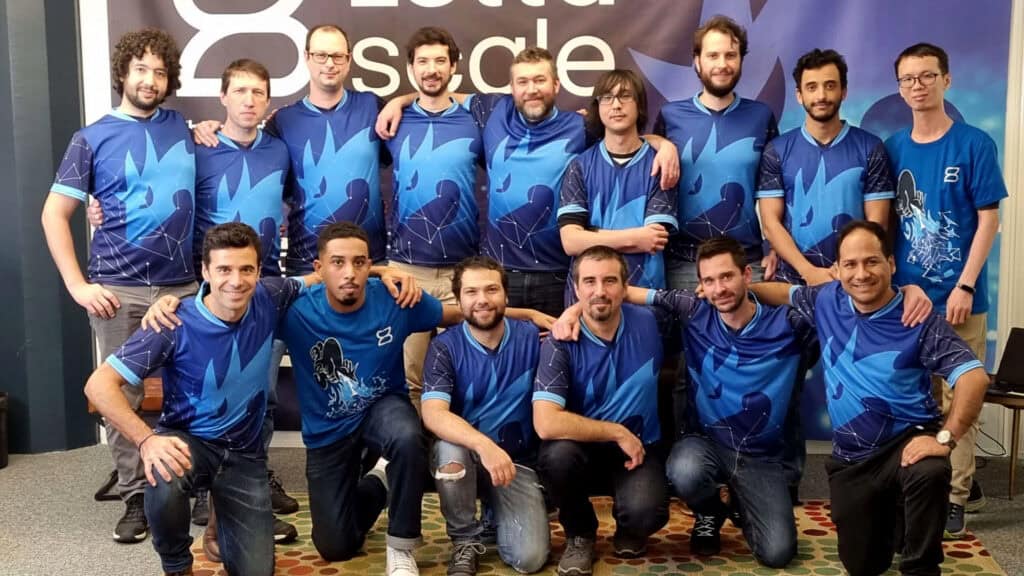
These values are central to Corsaro and ZettaScale’s work, so much so that the company’s team of 60 ‘Zettlers’ live and work by Seven Knightly Virtues of courage, justice, mercy, generosity, faith, nobility, and hope. “I think it would be great if all companies had such a strong set of values,” says Corsaro, introducing the concept.

“Courage, for example, is essential to innovate because you’re doing something that no one else has tried so you have to be brave enough to go for what you believe in. Justice ensures we have a fair workplace and are equally fair and trustworthy when working with our customers. That’s particularly important; we’re essentially building the nervous system of complex infrastructures so our customers have to be sure we’re a partner they can collaborate with and trust. Faith and hope drive our belief in what we do and the good impact we think it can have on the world, and our nobility means we’ll never give up on that belief. Generosity is about us giving back and being part of something that improves the status quo for everyone.”
The last plays an important role in how the company works, with a core focus being on connecting every human and machine, and the democratisation and decentralisation of technology – all ZettaScale’s solutions and technologies are open source, a decentralised software development model that encourages open collaboration. “Technology should be developed to support humans, not overpower us or make us redundant,” Corsaro reflects. “I’ve seen technology advance massively over my career, but things like open source have been so powerful, particularly for areas like education and giving more people access to opportunities. We talk a lot about things like cost reduction in tech, while sometimes forgetting the really incredible impact it can have in areas like learning.
“Connectivity, which Zenoh addresses, is also so important for society,” he continues. “Think about things like remote operations, which are essential in natural disasters or crisis situations like the Fukushima nuclear disaster. It’s a great example of what’s possible when you bring humans and machines together. Remote surgery is another case in which connectivity and helping people to connect and work with machines can literally save a life. The downside of this kind of innovation is that some of the infrastructure and the protocols we have in place aren’t at the standard that’s required, can actually constrain communication and, as a consequence, negatively impact things like energy efficiency or people’s privacy.”
“I remember being around 10 years old or so and being fascinated with seeing early robots and making technology communicate. I just knew it was what I wanted to do”
— Angelo Corsaro, CEO, ZettaScale Technology
Innovation through Zenoh
These constraints were the genesis of ZettaScale. Corsaro became aware of the challenges while working as Chief Technology Officer at ADLINK Technology, which manufactures and develops edge hardware and software. Historically, the business had operated in aerospace and defence but newer work in growing or evolving markets like robotics, automotive, and smart city development demonstrated the constraints and challenges of existing protocols like DDS (Data Distribution Service).
“They were intended to be used in a fixed local network with an underlying assumption there would be low packet losses, which means data getting lost as it travels through a network and failing to reach its destination,” says Corsaro. “Those assumptions were true in things like an air traffic control management system, but didn’t hold up as soon as you have a wireless network like WiFi, 4G or 5G. At that point I was actually working with the standardisation consortium that was pointing out these challenges and trying to push development and innovation forwards, but nothing really changed.”
In a move reminiscent of the bold and courageous pirate spirit Corsaro admires, he left that group, formed ZettaScale as a spin-off of ADLINK and started developing Zenoh. During this formative period, he and the ZettaScale team were driven by two core objectives: to develop a protocol that could run from very small devices like microcontrollers up to data centres with no loss of performance, inspired by the challenges experienced in ensuring data flow from the countless sensors used in smart cities, and to create a protocol that could unify data in motion and data at rest.
“We always had challenges when maintaining data stored on the periphery of a system,” says Corsaro of the second objective. “If you store data closer to you in a system, it’s faster to access – if you’re battery powered you don’t need to waste energy sending it to the cloud. But if you do that with existing technology it can be hard to keep track of where data is stored because you know where the databases are, but don’t know which data is contained by the databases.
“Imagine you have a temperature or noise sensor,” he continues, explaining the importance of unifying data in motion and at rest. “It produces a string of values and, when you distribute this information you use what’s known as a publish/subscribe protocol. These have location transparency, which means as long as I know the name of the data I can express a subscription from anywhere on the network and the protocol will get me that data – I don’t need to know where the source of the data is. The problem is that as soon as the data gets stored somewhere, I lose the location transparency because I need to know the precise location of the database where the data is stored.
“Our hypothesis was that, if we manage to have location transparent data at rest then we no longer need to know where the data is stored, you can keep it stored on the edges of your system,” says Corsaro. “This completely changes the way in which information can be routed. Now, with Zenoh, you can very efficiently and without constraint, distribute data, store it wherever you want, and retrieve it from anywhere on the network. This is powerful because it means you can keep things decentralised, which is really important for many modern use cases like robots or in vehicles.”
ZettaScale has grown rapidly over the last couple of years, driven by the uptake of Zenoh by key players in robotics and automotive. The robotics industry was an early adopter of Zenoh, with it being chosen by the Robot Operating System (ROS), an open source set of software libraries and tools that help researchers and developers build and reuse code between robotics applications. The company has seen several commercial deployments of Zenoh in robotics, and in automotive where it is collaborating with General Motors to develop the framework for the next generation of software-defined vehicles.
“Consider things like remote operations, which are essential in natural disasters. It’s a great example of what’s possible when you bring humans and machines together”
— Angelo Corsaro, CEO, ZettaScale Technology
Driving energy efficiency
Beyond current use cases, Zenoh has the potential to have a far broader impact, with several companies in transportation, robotics, and telecoms turning to ZettaScale to significantly cut the amount of energy required to send data. “Previous technologies forced you into topological constraints whereby even if you’re in the same room – imagine you want to control your thermostat from your mobile phone as an example – that communication goes through a data centre thousands of kilometres away,” Corsaro explains. “People think that’s acceptable because devices are labelled as ‘power efficient’, but the bulk of that energy is actually used in this kind of nonsensical journey halfway around the world that data has to take.
“Zenoh has no topological constraints, so it allows you to communicate directly with anything in your network,” he adds. “In the current climate, thinking about how we can minimise the energy use of our own devices, and the significant emissions associated with data centres, is crucial. And Zenoh, which is one of the best technologies to reduce energy consumption in this process, can have a massive contribution here if we deploy it properly. Take a warehouse as an example, where you have hundreds of autonomous mobile robots and other technologies working around the clock – that’s a lot of communication, and therefore a lot of energy, going back and forth to the cloud. With Zenoh you don’t need to do that any more, so imagine the energy and cost savings for the company, as well as the wider impact to the planet and environment.”
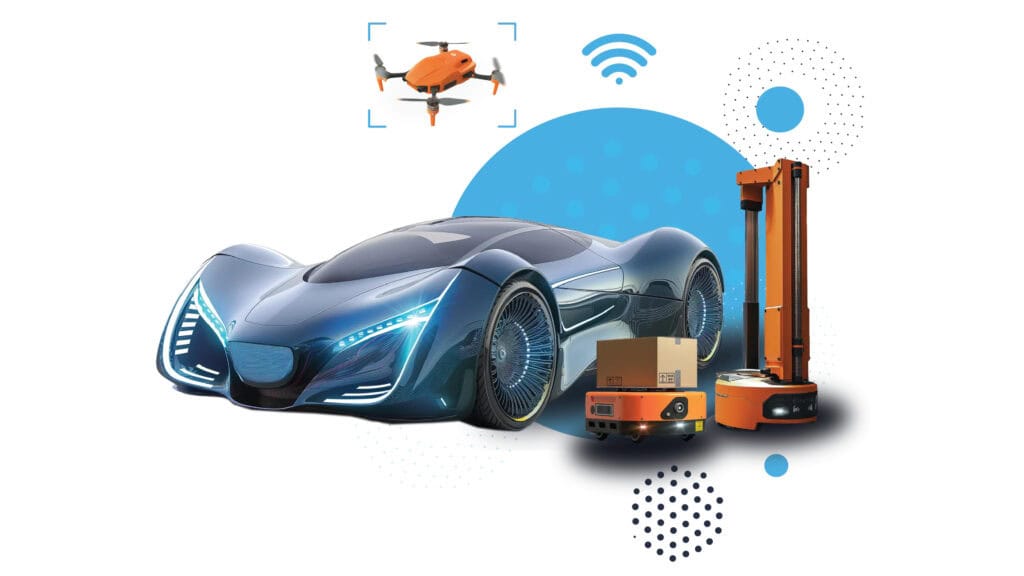
Zenoh could also be impactful in other areas of sustainable development and innovation, in particular the growing deployment of autonomous and connected vehicles such as drones, last-mile delivery robots, and urban aerial mobility solutions, says Corsaro: “The volumes of data that will need to be shared to enable this transition are staggering, and the existing cloud-centric architecture we have in place won’t scale to the level needed for mass adoption. That makes the decentralisation of a solution like Zenoh critical to ensure these kinds of technologies can operate effectively. For us, there’s the opportunity to drive scalability of important innovations, and to reduce energy consumption while we do it.”
“Thinking about how we can minimise the energy use of our own devices, and the significant emissions associated with data centres, is crucial”
— Angelo Corsaro, CEO, ZettaScale Technology
Making a positive impact
ZettaScale will soon release version 1.0.0 of Zenoh, the first version of the protocol that guarantees core backwards compatibility, following an ongoing validation and evolution process that Corsaro describes as ‘obsessive’. The focus for the company, he says, remains largely in the robotics and automotive sectors where there continues to be rapid innovation and – in the case of the automotive industry – revolutionary changes in the ways vehicles are designed, built, and manufactured.
However, he and the Zettlers are also dedicated to exploring new ways of making a positive impact for people and organisations. “Zenoh has great horizontal applicability, meaning there are many potential use cases to open up in the future,” he adds. “I’d love for us to get into the medical industry, for example. It’s an area where there’s huge potential for innovation but, in something like home care where you have to monitor complex life parameters, integration of existing solutions is challenging. It would be interesting to create a way in which these can be monitored without people’s personal data being stored on a cloud, and Zenoh gives you that freedom.
“Clinical data is another area we could really make a difference in,” says Corsaro. “I was working on a project with MIT when I became aware of the issue of morphine narcolepsy, which can happen as a result of people self-administering too much morphine when in hospital. Doctors use pulse oximeters to monitor patients, but they’re very sensitive meaning false alarms happen frequently and a lack of trust in the equipment results in real alarms sometimes being ignored. We could avoid that but the information of the pulse oximeter, and the heart and respiratory rate monitors aren’t integrated and data fused because they’re using different protocols. Imagine how unifying all that data could make a real difference.”
For the immediate future, Corsaro plans on taking ‘one battle at a time’ as he and the company develop and grow. “I don’t wake up in the morning wanting to be a billionaire,” he remarks. “I get out of bed to try and make a good impact and solve the problems that exist. Our plan is to create a sustainable company with a team that loves working here and really feels our mission and values. We’re in no rush. The focus has to be on good engineering, getting things right, and remaining confident in our conviction and our plans – it all comes back to believing in our knightly virtues, after all.”