

Aduna CEO Andrew Hunt talks superfoods and the ‘Tree of Life’, empowering female farmers and entrepreneurs, and tackling the challenges in Africa’s Sahel
It’s quite remarkable, the baobab tree. Prehistoric in its origin and predating mankind and the splitting of the continents it has, for more than 200 million years borne the brunt of everything the planet – and us – can throw at it. It’s little wonder it’s known by the communities who hold it close in their traditions and folklore as ‘The Tree of Life’. For those same communities, the baobab is a source of nutrition and health, food security, and economic welfare.
We joined Andrew Hunt, co-founder and CEO of plant-based sustainable superfood brand Aduna, to find out more about how the baobab and other African superfoods are a vital lifeline for thousands of small-scale producers. Aduna, a certified B Corp, works in partnership with grass-roots NGOs to empower female farmers with sustainable incomes and regenerate and restore land in the African Sahel region.
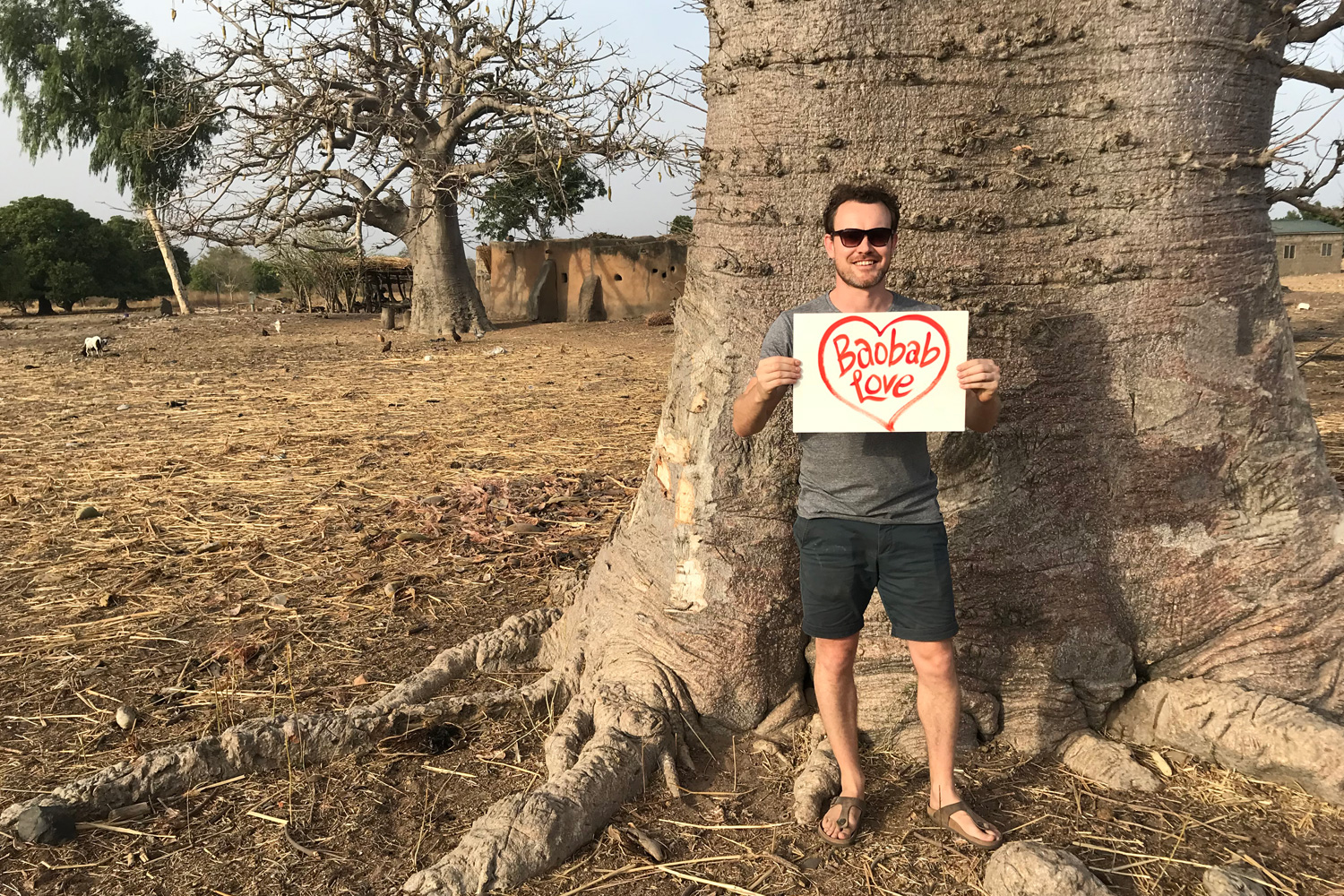
Tell us about your journey to starting Aduna, particularly how you ended up moving to and working in West Africa for four years?
I grew up in London and started my working life in advertising, investing all my energy and creativity into promoting products I didn’t believe in, for clients who mostly didn’t appreciate it. Although I was doing well, I started suffering from anxiety and questioning my purpose in life. It eventually spiralled into a full-on meltdown; I ended up quitting my job, and my mind turned in on itself. For six months I was unemployed and clinically depressed. At the age of just 25, it felt like my life was over.
At my lowest ebb, I got a random phone call from a family friend, offering me the opportunity to volunteer with a farming-based social enterprise in The Gambia. I didn’t want to go, but thankfully my friends and family put me on the plane. Having planned to be there just six weeks, I ended up staying for four years. I discovered a form of grass-roots business, where sales translated directly into tangible positive impacts in the lives of people who needed it. It was the inspiration behind the creation of Aduna as a vehicle to connect remote rural communities in Africa with Western health-conscious consumers, through delicious, nutrient-rich superfoods.
What did that period teach you about life and work in that region, the challenges faced by local communities, and the impact of climate change on marginalised people?
Living and working in West Africa was a breath of fresh air. I was embraced by the people and fell in love with their warmth, vibrancy and culture. At the same time, I gained insights into the challenges faced by rural communities in the Sahel region of Africa, who are cut off from economic activity while bearing the brunt of climate change, as manifested by unpredictable rains, drought and deforestation. With
environmental degradation comes poverty. They are two sides of the same coin.
Themes like entrepreneurship and impact clearly underpin your approach. Where does that come from and did your time in the Sahel influence your view on what ‘impact’ really means to people and communities?
My dad was an entrepreneur in urban regeneration and was always most concerned by the impact of the built environment on the community – I guess I inherited some of his traits. The social enterprise I ran in The Gambia connected neglected communities to the market, and the impact was very visible. Just two weeks after a good tomato harvest, for example, we would return to the same household farm to find the kids were now in school, or the family was building a new room to their house so that everyone didn’t have to sleep in the same bed anymore.
I started thinking about ways to scale it up: how could we connect these remote communities, many of which are struggling for survival, with affluent consumers in the developed world, to the benefit of all?
“Through our baobab supply chain, we’ve created sustainable incomes for over 3,300 women, helping them provide food, healthcare, and education for over 20,000 family members”
How did you go from those foundations, and your passion for purpose and community, to building Aduna?
The concept was to create the business as a vehicle for identifying underutilised, indigenous ‘superfoods’, pioneering them into the market, and plugging in rural communities via a direct, sustainable sourcing model. To achieve this, we work in partnership with a grassroots conservation charity in Northern Ghana that in turn creates and manages a network of women’s co-operatives.
We started with a baobab sourcing pilot in 2014, working with just three communities. Fast forward 10 years and we’re now working with more than 100 communities, comprising more than 3,000 women. This means there is a tangible, traceable, high-impact connection, all the way from a consumer who picks up one of our products from the shelf, right the way through to an individual baobab producer and the family she provides for.
The word ‘Aduna’ itself means ‘life’ or ‘world’ in Wolof, a language I learned to speak in The Gambia. It speaks to the connectedness of all living things. This is a philosophy we live by and that has been atthe centre of everything we do from day one.
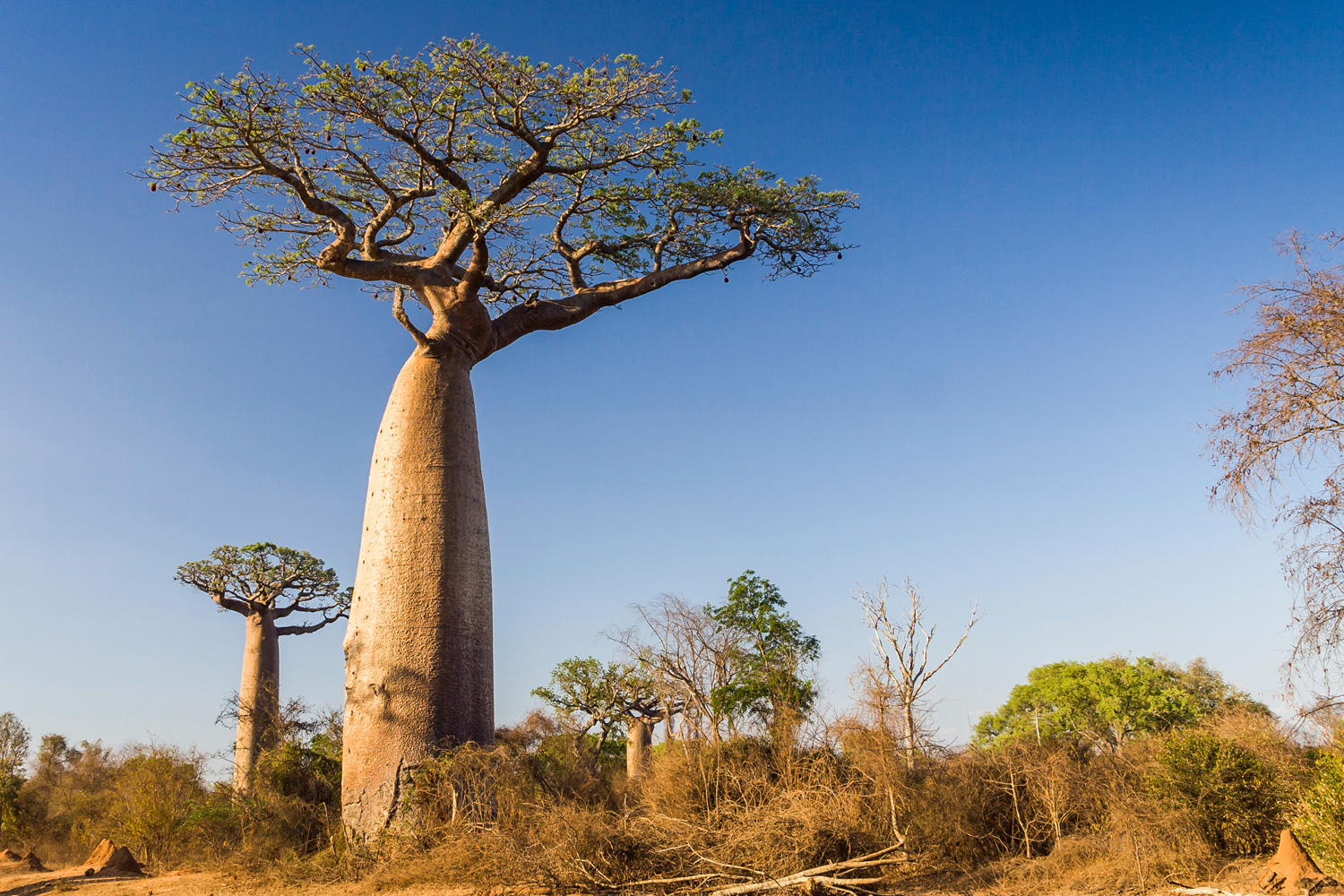
The Baobab tree is an incredible work of nature, from superfood through to restoring land and being the heart of the community. Can you tell us what it means to the people who live and work with it?
The baobab tree, also known as the ‘Tree of Life’, was the first ever flowering plant on earth and is abundant in the Sahel region of Africa. There’s no such thing as a baobab plantation, every tree is community owned and wild harvested, providing food, water and shelter for both animals and humans. They have adapted to survive in the harshest conditions, storing water during the rainy season, then bearing fruit when all around them is dry.
Baobab is the only fruit in the world that dries on the branch, and is a powerhouse of nutrients packed with vitamin C, calcium, magnesium, potassium and prebiotic fibre; it tastes just like zesty sherbet. Despite its benefits, baobab isn’t widely used locally in Ghana – most of the fruit was going to waste and the trees were at risk of being chopped down and replaced by cash crops. Now they’re generating additional and sustainable income, they are well protected by communities, ensuring their longevity.
Women are often adversely affected by many of the challenges the Sahel region faces. How do you help empower them and how far-reaching are the benefits and impact of your initiatives?
It’s the women in the communities that own the rights of access to the baobab trees and are the collectors, so the income from harvesting and selling the fruits goes directly to them, which as we know has an economic multiplier effect on the local communities. This system is reinforced by the creation and management of strong cooperatives, including a savings and loans component.
As a result, through our baobab supply chain, we’ve created sustainable incomes for over 3,300 women, helping them provide food, healthcare, and education for over 20,000 family members. By involving women in our supply chains, we’re promoting gender equality and economic empowerment, leading to stronger communities and inclusive growth.
“The women in the communities that own the rights of access to the baobab trees and are the collectors, so the income from harvesting and selling the fruits goes directly to them”
How do you approach making industry that’s also centred around positive impact?
While we now include superfoods from all over the world in our products, we specialise in what we call transformational superfoods from Africa. These must meet three main criteria:
- Have an impressive nutrient profile, with clear health benefits for consumers, based on a history of indigenous usage.
- Generate sustainable livelihoods for small- scale producers, empowering them to provide for their families.
- Be drought-resistant and regenerative, helping restore nutrients to depleted soils and/or nurture local ecosystems
Examples include baobab fruit, moringa leaf, and fonio grain, all of which are exceptionally nutritious, delicious, and impactful. We’re very proud to have introduced all three of these ingredients to the UK market. Creating a positive impact in the superfood industry hinges on sustainable sourcing. Looking for accreditations like Organic and FairWild certifications can help too, as they provide evidence of traceability and sustainability.
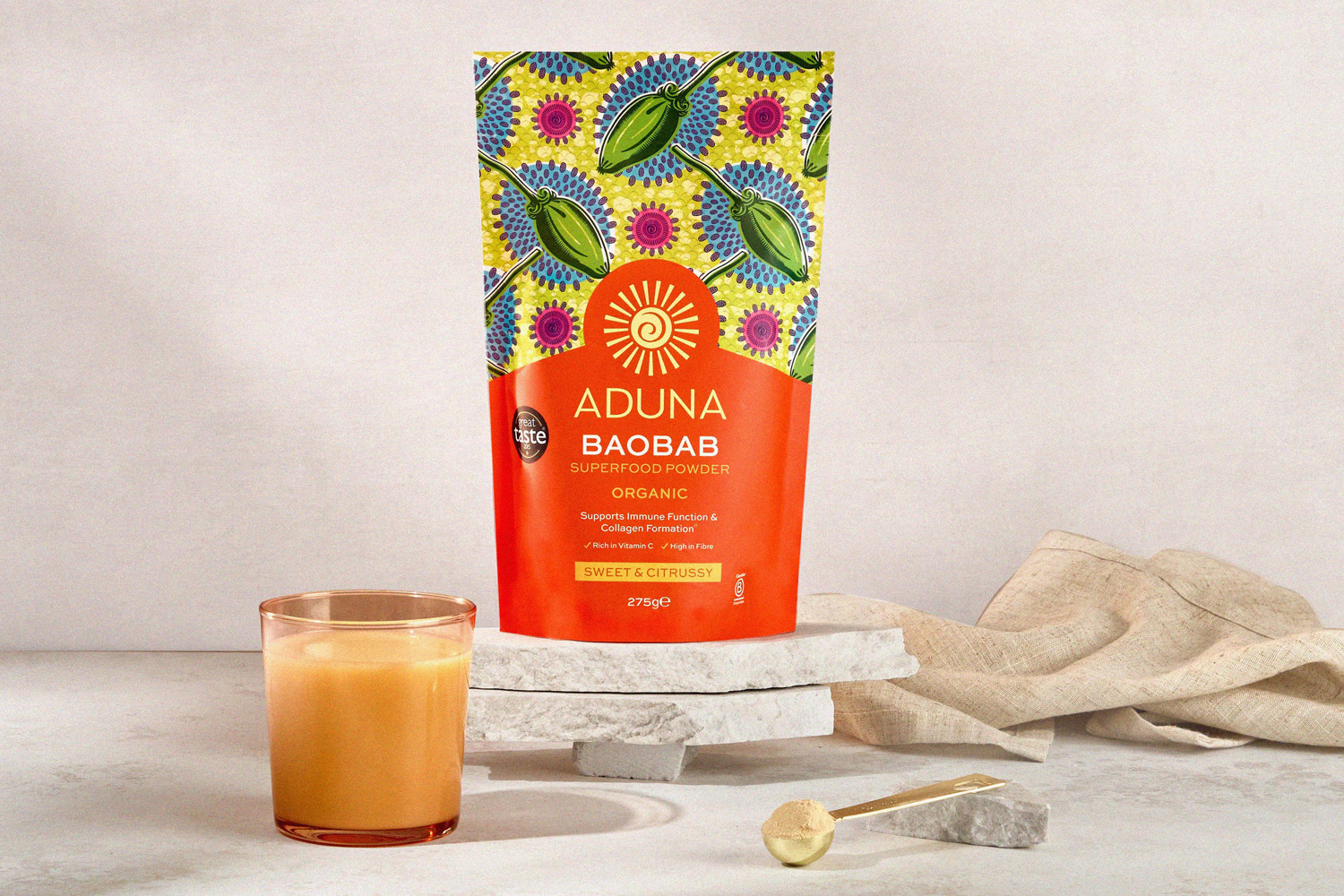
What goes into making a FairWild-certified baobab supply chain?
FairWild is a third-party audit-based certification, combining FairTrade principles with ecological sustainability for wild-harvested crops. Achieving FairWild for our baobab supply chain – and launching the world’s first ever FairWild certified range of superfood powders (our new Superfood Blends) – is the culmination of 10 years work.
At the heart of this is our partnership with ORGIIS Ghana, a local conservation NGO that works directly with the communities to create and manage cooperatives, sustainably harvest and process baobab fruit, and grow and distribute new seedlings to help restore soil and regenerate the tree canopy.
What about building the Great Green Wall initiative and restoring degraded land? How is Aduna contributing to areas like these?
The Great Green Wall is an inspiring African-led movement to fight desertification and climate change by planting a wall of trees across the continent. With our NGO partner, we’ve already planted over 35,000 baobab and moringa trees in Northern Ghana. This provides income for local communities and helps protect our planet for future generations.
By working with organisations like the African Union and UNCCD, who have provided grant funding for some of the community-based initiatives, we’re helping to make reforestation and sustainable development a reality in the Sahel.
Where do you want to see Aduna go from here and what does future impact look like?
Our aim is to bring our delicious, sustainable superfoods to even more people around the world. Our new range of Fairwild certified Superfood Blends is our latest offering. By teaming up with great partners, we can make a bigger difference, supporting more communities in Africa and expanding our land regeneration programs. It’s a wonderful cycle of positive impact, and although we’ve already been going for 12 years, it feels like we are only just getting started.