

SolarAid’s John Keane on the transformative power of solar energy, how light can change lives, and achieving universal access to electricity
The flick of a switch. You probably don’t even notice yourself doing it. Or realise the ways in which the same simple action you perform countless times a day can quite literally change a life. On a basic level, access to electricity gives you the freedom to switch on a light that extends the day so you can complete important tasks around the home, read, create, or work should you need to. It also makes it possible to enjoy time with your friends and family without confining social activity to daylight hours.
But what if you need a life-saving operation after sundown or have to travel miles over dangerous, unlit terrain in an emergency? You may need to keep a business open to make money, or make sure your newborn child is delivered by more than a torch or candle light? For nearly 600 million people in sub-Saharan Africa with no access to affordable clean energy, this is the reality. Countless communities in economically or geographically hard to reach places see their working days end when the sun sets unless they use batteries, kerosine lamps or paraffin candles – all of which are expensive, dangerous, and potentially toxic alternatives to electric lighting.

“Imagine removing electricity from everything,” says SolarAid’s John Keane. “It’s how I try to convey to people just what the situation is like for the remote communities we work with. Growing up in the UK, where every facet of modern life uses electricity, is world’s apart from a rural village in Zambia but think about having no electricity not just in your home but your work, your school, your hospitals and cities, and you start to realise the economic and social impact it would have.
“That’s everyday life in rural sub-Saharan Africa, where there is no light or electricity in homes and schools, few radios and mobile phones for communication, education, and information, where three out of four health facilities across the continent have unreliable access to electricity and one in four has zero access,” he continues. “These are areas impacted heavily by poverty and the climate crisis. In Zambia, for example, the grid is largely hydro-powered but water levels are low as a result of rising temperatures. It means that, if you’re lucky enough to have access to electricity you routinely face power cuts and power rationing; in rural hard-to-reach areas there’s little chance of any access at all.”
Keane joined SolarAid, which tackles poverty and climate change by building sustainable markets for clean, safe, and affordable solar lights in Africa, as CEO in 2017. Passionate about changing the ‘unacceptable reality’ of people living without access to electricity and light, he has devoted his career to establishing solar projects, enterprises, and innovation after seeing firsthand the challenges of living without light.
“I was privileged to live in close proximity with the community and within households, and I still ground myself in those early experiences,” says Keane, recalling his time volunteering in a rural village in Tanzania in 2000. “You notice the simple things you’re used to are more difficult. By 6/6.30pm everything ground to a halt; we had kerosene lights and I’d sit and read but it’s not pleasant – kerosene is costly, can be toxic, and only gives a dim light that can give you headaches and eye strain. I took a small radio with me and a stack of batteries but ran out quickly. Losing the ability to listen really hit home how important a tool radio is across these communities for education, entertainment, and important information to support livelihoods.
“I felt compelled to start looking at simple, easy to access solutions that could make an immediate impact,” Keane notes. “I was convinced there must have been a way to power a light or play a radio with renewable energy that wasn’t dependent on the kind of high-tech or expensive solutions we’re used to in the West – affordability was key. It was just a case of finding a way to deliver a small amount of power that could make a very big difference in someone’s life and then thinking about how to scale from there. That’s still the essence of SolarAid today.”
Driving universal access
SolarAid was established in 2006 to fight poverty and climate change based on an ambitious vision to create a world where everyone has access to clean, renewable energy. It uses a pioneering trade not aid approach focused on developing sustainable enterprise and scalable programmes to catalyse local markets for safe and clean energy access for rural African communities. Over its history SolarAid has spearheaded the first generation of pico solar lights – small solar lights that have the potential to fast-track access to electricity for millions of people living beyond the reach of on-grid energy markets – distributing more than 2.3 million solar lights over the last decade. It has reached more than 12 million people with clean, safe and renewable light.
While this progress is significant, urgent and game-changing action, innovation, and collaboration is still necessary to ensure that the world achieves the targets set out in Sustainable Development Goal 7: to achieve universal access to electricity by 2030. Between 2010 and 2021, 51 countries achieved universal energy access and global access rose from 84% to 91%. However, global uncertainty and the effects of the COVID pandemic have slowed the pace of energy access in sub-Saharan Africa where SolarAid works, with the poorest and most remote regions being left behind. This impacts areas such as poverty reduction, education levels, gender equality, and socioeconomic development.
Patterns of energy access differ across Africa, but the largest challenges are affordability, accessibility, and securing investment in infrastructure and generation. Malawi, where SolarAid has been building a sustainable solar market since 2006, is rated the fourth lowest country for energy access in the world with only 5% of people in rural areas having access and poverty rates reaching 71%, making affordability a significant barrier to progress. In other vast and sparsely populated countries like Zambia – where Keane joins Citizen Zero from – the availability of solar lights in inaccessible areas pose a challenge as a result of the costs of bringing products and solutions to rural communities and households.

“Real change can’t happen in isolation,” Keane states. “You can’t grow up and be educated in the UK then live in a Tanzanian village and not begin to wonder ‘why is life like this? Why is there such a disparity? Why do such differences exist?’. Really, this isn’t just about a light bulb in a home or a small-scale solar solution, it’s about trying to act on the inequality in the world and addressing the fact that some people still live in abject poverty. I’m not an economist or in a position to change policy, but at SolarAid we’re very practical people. It means we can work with communities to understand the actual and immediate energy needs, test and trial the appropriate solutions, and get to work.”
To reach universal access by 2030, off-grid renewable energy solutions like those provided by SolarAid will play a critical role. The organisation provides lights ranging from a handheld study light through to a solar system that can light a school classroom or ward in a healthcare clinic. This range began with a simple concept: small solar panels that can fit in the palm of a hand and harness the power of the sun to charge small batteries that are then used to power efficient LED lights. These affordable and small lights are a crucial first step in reaching a cleaner and safer renewable future – SolarAid says this first step has a greater impact than any subsequent step up the energy ladder.
“It doesn’t take long working with a community to understand the immediate needs and how these various solutions can be implemented to make an impact,” Keane explains. “Light is the obvious and most pressing problem for many. I recall walking between villages at night and, if the moon isn’t in the sky, you can see nothing, not even a hand in front of your face. It’s a real demonstration of how much even a small solar light or LED comes into its own.
“But it doesn’t stop with light,” he continues. “Small power for radio is invaluable, particularly where the service is used for educational purposes, to provide agricultural programmes and essential information to communities, or for announcements like drought warnings and climate or temperature warnings. Likewise, mobile phones enable communication, access to market prices and information, and engaging customers if you run a business, and they don’t need much power so are perfect for solar energy. Beyond that, we work with healthcare facilities with appliances that don’t need much power, like small pulse oximeters that were invaluable during COVID or foetal dopplers that allow nurses to monitor a baby’s progress during pregnancy.”
“This isn’t just about a light bulb in a home or a small-scale solar solution, it’s about trying to act on the inequality in the world and addressing the fact that some people still live in abject poverty”
Sustainable solar enterprises
SolarAid focuses on building local, sustainable businesses that can be scaled and provide the best opportunity to achieve true universal energy access. Its trade not aid model creates local markets that allow solar lights to reach places and people that traditional markets don’t. To deliver this it established a social enterprise, Sunny Money, in 2008. This uses an innovative distribution model to sell solar lights in rural off-grid communities, helping to instil trust, create greater demand in new and often unfamiliar technologies, and build the foundations for a sustainable solar market in sub-Saharan Africa.
“We really believe in business-based solutions and catalysing markets, it’s not just dropping a solar light into a community,” Keane explains. “Developing the infrastructure and sustainable access to products that are affordable and good quality is where we make the difference. Take one light as an example – when it breaks, it’s finished and the access to everything light brings is over. If you have an ecosystem of entrepreneurs who sell the lights and have the knowledge, tools, and skills to repair and update, then suddenly you have a local market where those lights can shine for years.
“We’re proud of how we’ve enabled that through Sunny Money and been part of the solar revolution on this continent; we’ve created the technology, grown the awareness and demand, and satisfied it with a local market. As a result, more people are using solar energy and solar lights in Africa than ever before. That’s rightly a cause for celebration. But I’m always drawn back to our overarching ambition of creating a world where everyone has access to clean and renewable energy by 2030 and there are still virtually no examples of that in sub-Saharan. There are still people who struggle to afford even a basic solar light that may cost five dollars, so the urgent challenge is to now reach the toughest market segments, overcoming the barriers of poverty and deprivation to deliver clear, affordable, sustainable energy into communities considered low margin, high risk, and beyond reach.”
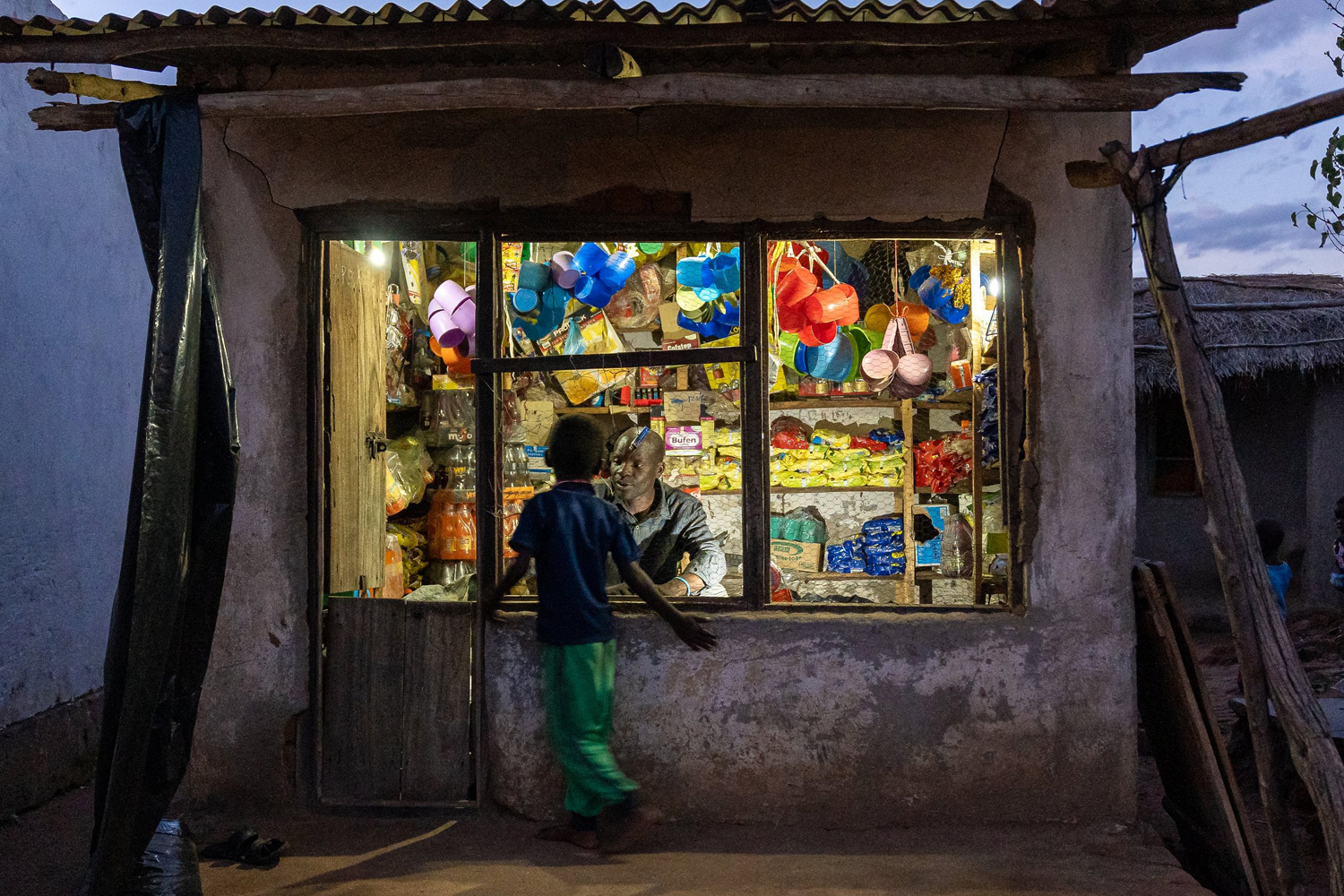
Product and process innovation is key to this, says Keane, pointing to increased focus on innovative new programmes, initiatives, and models designed to reach these communities and facilitate replication and scale across new geographies. “When you’re developing a marketplace and asking people in poverty or on very low incomes to make an investment decision it’s a difficult prospect, even if it can change their life,” he adds. “We see this as the gap between what the market can do and what it can’t, and we’re trying to develop game changing innovations and new business models that can reach this segment of the population.”
An example of this approach are SolarAid’s Light Libraries, which help low income students access solar lighting. Light Libraries make solar lights available through rural schools, where students can rent them for less than a penny or choose rent-to-buy options. Each school is equipped with lights that can be borrowed and a solar home system that lights classrooms and enables a higher standard of education.
Students take lights home to study, read, and socialise, while their families also benefit from having light in the household. Over time, the solar lights help households save money – renting is cheaper than buying a candle, for example – while also generating revenue for local schools and boosting education budgets. Each Light Library is linked with a locally recruited solar entrepreneur who can offer lights for sale in the community.
“We’ve also introduced our Light A Village project, which is an energy-as-a-service model where customers pay the utility provider for the electricity they use,” adds Keane. “Instead of asking someone to pay for a solar system that will light the home, play a radio, or charge mobile phones, we install it for free and then train local customer service representatives to install and repair, creating long-term and sustainable income. You’re taking away the risk of investment for people and creating the infrastructure to enable 100% of the community to have access to basic solar light and power. From there you can scale and consider other energy needs like installing in schools and health facilities, or to support farmers with things like irrigation, or cooling and storage systems that boost production, livelihoods and incomes and, ultimately, the economy to fight poverty.”
“If you have an ecosystem of entrepreneurs who sell the lights and have the knowledge, tools, and skills to repair and update, then suddenly you have a local market where those lights can shine for years”
Electricity changing lives
In many rural communities, women and young girls are adversely affected by lack of access to electricity. Conversely, because they are the primary users of household energy and trusted members of social networks and community groups, SolarAid has found that women are often the best placed to bring renewable energy to remote areas despite persistent barriers to running businesses and engaging in entrepreneurship.
SolarAid runs the Mayi Wala programme, which supports women solar entrepreneurs in reaching last mile communities and provides access to group-based training, finance, and business support. The organisation trains the Mayi Wala, which translates to ‘Shining Mothers’ in Malawi’s national language, in financial management, marketing, and the benefits of solar products, and helps to boost their businesses in the local community. It provides them with solar lights on interest-free loans to enable them to scale. To date, there are 147 active Mayi Wala groups across Malawi, which have sold 9,179 solar lights resulting in over 45,000 people accessing clean and affordable energy.
“Women play a huge role in the communities, and there’s still a significant gender aspect to energy access that just doesn’t get talked about enough,” Keane explains. “The Mayi Wala are women working together in cooperatives, which makes it easier for them to develop and grow and for us to engage and train them. It’s an incredible project. They support and help each other , work through their training and access finance together, and then go on to kickstart solar businesses that support and serve the community. I met a wonderful woman in Malawi, a grandmother in her 60s. She showed me her solar light and her phone charger, telling me that Malawi was moving forward and that she used her solar products to light her home, play the radio and power a sewing machine so she could generate income. Those simple stories are always so inspiring.”

SolarAid will continue to focus on innovation, with the emphasis on scaling and growing new programmes like Light a Village, says Keane: “It’s really driving us, and the exciting prospect is that you can potentially install hundreds of these small solar systems a week and deliver community training so everyone knows just what’s at their fingertips. The idealist in me still believes we can achieve universal access, at least for solar home systems, across the continent by 2030 but it will take a lot of hard work. Nations, governments, and organisations are all looking for solutions, but there’s still a lack of knowledge of how to deliver – that’s where SolarAid is so important in showing practical solutions and engaging with partners to develop ways in which we can scale.”
To do so, says Keane, will require securing private investment for growth, the development of possible subsidy models designed to overcome financial barriers to access, and the continued growth of solar markets and technologies. To this end, all of SolarAid’s programmes are open-sourced to encourage replication and the development of collaborative partnerships. The organisation also actively shares results, know-how, and lessons learned to facilitate wider adoption of successful approaches and fast-track universal energy access across the continent.
For Keane and SolarAid, every small win on that journey represents a crucial step closer to universal access and a chance for people and families to live in a better way. “I see so many incredible things happening,” he recounts. “One I always remember is being hosted by a family in Western Kenya who had a small solar system lighting the home. There wasn’t work, or farming, or anything like that. It was just an evening meal, the radio playing, and a family around the table eating and laughing together. All of that was happening because of access to electricity. It was a wonderful moment and I felt privileged to be with a group of people simply having a good time together – you multiply that by 150 million and that’s really the kind of impact and joy that we all want to see.”