

We speak to Scott Poynton about meaningful change, protecting people, nature, and planet, and why we should put the soul into business decision making
You may not know Richard St. Barbe Baker. You should, of course. Like Scott Poynton does. The pioneering botanist, forester, and founder of the ‘Men of the Trees’ conservation and protection group, has an enduring legacy. He’s also the reason we’re here talking to Poynton. For while the Australian impact entrepreneur has spent the last 25 years inspiring strong, credible sustainable and regenerative action around the world, it was listening to Baker as a boy that set him on course to leading real and impactful change in the way businesses affect the planet.
It was lucky that the young Poynton heard Baker at all. Growing up in rural Australia on the outskirts of Melbourne, he quickly fell in love with nature, spending long days outside exploring, learning the value of self-reliance and solitude, and nurturing a strong connection with the surrounding flora and fauna. Poynton was set on becoming a vet – his first business venture of selling tadpoles to the local pet shop aside. Until, on a rare Sunday afternoon indoors he heard Baker over the radio telling stories of travelling the world, inspiring people to understand nature, and working to protect and plant trees.
“Two minutes into a 30-minute broadcast, that was it. I’d decided: I’m going to be a forester,” he recalls. “It resolutely set my path in that direction, despite not even really knowing what the job was. I was very lucky, I don’t think young people necessarily have that kind of direction until later but, for me, whatever fork I came to in the road from that point on it was always about which decision would get me closer to being a forester. The whole journey just unfolded from listening to the radio.”
Poynton studied forestry at Canberra’s Australian National University. Here, he had the opportunity to fulfil a lifelong wanderlust, spending three months in the Middle Hills of Nepal living and working with families, studying trees, forests, people, and nature. “It was a great test,” he says of the experience. “I’d always had this hankering to go overseas, and it was a chance to find out how I could cope. I got sick, it was hard work, but I loved every minute of it and knew that my life choice had been right.”
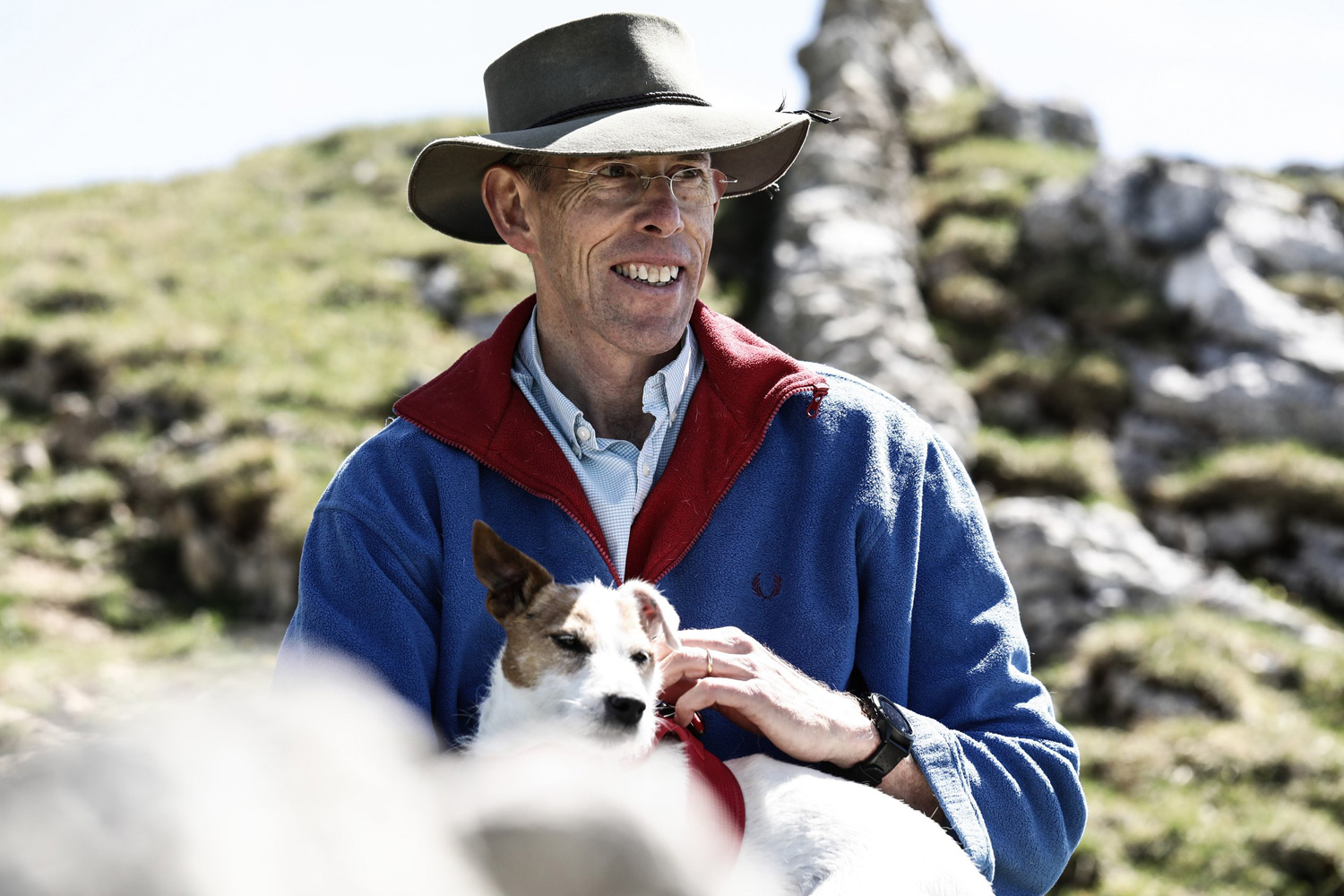
“Two minutes into a 30-minute broadcast, that was it. I’d decided: I’m going to be a forester”
— Scott Poynton
After studying, Poynton worked as a forester in the small, isolated town of Fingal in Tasmania where he was surrounded by mountains and worked on natural and plantation forest management projects. Following a brief interlude to complete a Masters at Oxford University before returning to forestry in Tasmania, Poynton fell into consulting work and a visit to Vietnam’s Mekong Delta. “I was a project manager for two years working on reforestation,” he explains. “We were researching and implementing the best ways in which we could restore forests and land that had been cleared after the Vietnam war. It was a fascinating experience and by that point I was hooked on travel, seeing the world, and working overseas.”
Poynton continued to travel, his time in consulting seeing him visiting more countries, engaging with the natural world and the people he encountered, and working with businesses seeking direction and guidance on their own impact journeys. “I really enjoyed, and was most effective, working with organisations that were having problems or needed help. I was able to go into those situations with pretty big companies and help them navigate paths that were good for their own business, but also for people and the planet.
“I’ve always had this deep-rooted passion for change and taking positive action – just feeling that when something’s not working, let’s figure it out, understand that we can do better, and get it fixed,” says Poynton, reflecting on his work. “Since I was young I’ve believed in the importance of living according to our fundamental values, connecting with and listening to our inner voices, and how that can lead us on the path to making true change. I have a desire to look at conflict or problems and say it doesn’t have to be like this, things can be solved if we talk, if we understand what others are going through and find a way to cooperate to deliver better outcomes.”
Connect, cooperate, change
This approach has underpinned much of Poynton’s subsequent work, spending a large part of his career at the intersection of companies and NGOs, navigating complex conflicts focused on environmental impact and leading to profound and unprecedented breakthroughs. It kickstarted in the late 1990s where, after moving to the UK, a European-wide NGO campaign against garden furniture made in Vietnam from wood harvested illegally in Cambodia led him to found the non-profit Tropical Forest Trust (TFT). The campaign was tough on furniture providers, driving them to act, work on engaging NGOs, and make changes to their business models. Poynton’s work in Vietnam meant many companies turned to him for help.
The Tropical Forest Trust, which later became The Forest Trust, started by assisting those trading tropical wood products to link their supply chains to well managed forests and help forest managers achieve FSC certification. It worked with factories and buyers to monitor wood sources and supply chains, verified raw materials were legal and from well managed forests, and established environmental credibility for timber product traders. Today, as Earthworm, it works with businesses to co-create solutions with companies, farmers, NGOs and governments to serve people and regenerate nature.
For Poynton, the focus was on mediating between conflicting parties, building on his natural passion for collaborative problem solving and delivering through connection, cooperation, and change. “Bad things happen when people fight,” he says. “They get hurt and there’s collateral damage, most often to those around them but also to nature. That makes the chance for things to get better so much harder – I saw it when I was in Tasmania and NGOs were fighting with the Forestry Commission, as they battled things just continued to get worse. I fundamentally believe that we can only solve the world’s problems if we cooperate, sit down together and treat each other as people, and work together on the best possible outcome.
“We had seven founding members in the TFT and initially it was about making them understand they couldn’t just pin the problem on their suppliers,” says Poynton. “My response to that argument was ‘you’re selling the products, so you’re profiting from forest destruction, human rights abuses, or the possible destruction and extinction of species like the Sumatran Tiger or Orangutans. You have to be part of solving the problem’. The absolute breakthrough we pioneered off the back of that was the concept of responsible sourcing. It’s commonplace now, but at the time it was a real change in terms of businesses taking responsibility for their supply chains.”
Response to the scale of the challenge varied between businesses, says Poynton. Some, shocked by the impact they were having, went all in on working towards finding solutions driven by a passion to change and a visceral dedication to not being associated with the kinds of impact TFT was setting out during discussions. Others understood the brand implications illegal trading would have on their business and used it as impetus, while some, for their own reasons, didn’t fit with TFT’s values and mission.
The path to that level of change isn’t always easy. Poynton ardently believes it’s built on a deep connection to our inner voice, an understanding and connection with our emotions, and an openness that starts with the individual. This philosophy has helped him mediate business and NGO conflict, and seen leaders make profound decisions that have transformed entire industries and saved millions of hectares of forest. Before that point, says Poynton, there’s the small matter of ‘two parties thrashing at each other and basically only communicating through press releases’.
“The essence of my experience is that before businesses can find their way to cooperation, they had to reach a place where they felt absolutely lost,” Poynton says. “You’d work through phases of anger, indignation, despair and negotiation, and eventually you reach the point where you just have nowhere to go and don’t know what to do – that’s when you can move forward. Change happens deep in the hidden recesses of the human heart, and the path to cooperation only opens up when leaders stopped trying to use their head to find a clever way out of the mess they’re in and instead listen to their inner wisdom and guidance: ‘do we really want to be linked to deforestation, or to human rights abuses and the death of animals?’. The answer’s no. We didn’t really change people. Most people are fundamentally good. We just helped them connect to their true journey and, for most of us, that’s not to go out into the world and cause destruction.”
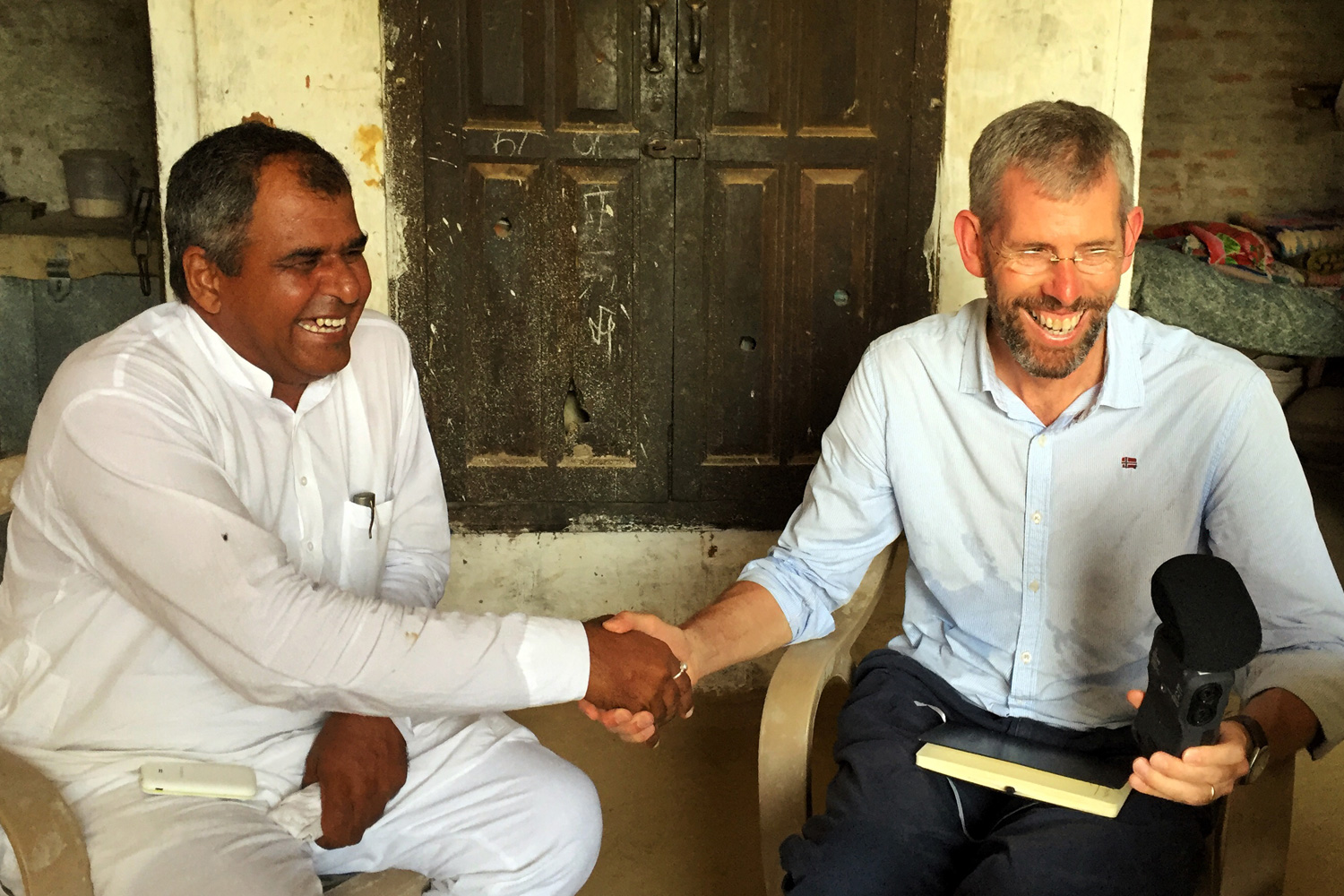
“We can only solve the world’s problems if we cooperate, sit down together and treat each other as people, and work together on the best possible outcome”
— Scott Poynton
Pioneering regenerative action
After 17 years Poynton stepped aside from TFT , leaving a legacy of work in more than 60 countries and the establishment of forest conservation and social livelihood programmes with thousands of companies and NGOs worldwide.
During this time he achieved several notable successes including supporting ScanCom International and Global Witness to lead the transformation of the wooden garden furniture sector, CIB and Greenpeace to secure the first FSC certified Congo Basin forest, Nestle and Greenpeace to announce the world’s first ever No Deforestation commitment, and Golden Agri Resources and Greenpeace to announce the first palm oil industry No Deforestation policy. He also supported Perhum Perhutani, the Indonesian State-owned teak corporation to remove 4,000 weapons from their forest protection programme and instead partner with communities, Asia Pulp and Paper and Greenpeace to announce a No Deforestation policy that saw bulldozers removed from two million hectares of forest, and Wilmar International and Climate Advisers to announce the world’s first No Deforestation commitment by a major trader.
Rather than dwell on celebrating these successes, Poynton saw them as the foundation on which to keep building. “Things have definitely changed, but we’re not quite in a brave new world just yet,” he explains. “There are certainly more companies worldwide aware of their impact on the planet and which have a strong sense of not wanting to be engaged with anything that can be damaging. That’s a real positive. But there’s still a larger group carrying on regardless, and many that don’t necessarily deeply live the change but are taking action, if only to show they have the right policies in place or to be able to compile their latest report or marketing collateral. We’ve got a long way to go and there’s no longer any excuse for doing nothing. No matter the context, business can do far more than a net zero claim or an ESG policy on a website.”
In early 2021 Poynton launched Pond Foundation, an impact enterprise that supports member businesses to pioneer strong, credible, and regenerative action through five key initiatives covering climate action, regenerative supply chains, community wellbeing, transparent claim verification, and forest protection. In the spirit of Poynton’s previous work Pond Foundation is action-oriented, uncompromising in its approach, and built on a belief in verification and ‘walking the walk’ rather than mere certification.
“We’d done great work with TFT but all I could see were claims coming out from businesses, particularly around climate change, and it just felt like greenwashing instead of action,” says Poynton. “I remember reading a report about the no deforestation work we’d supported that showed there were six million hectares of stranded forest assets in concessions in Indonesia that wouldn’t be felled because of our work. I realised that while they’re being protected from bulldozers, they weren’t being protected from climate change so, if I were really going to save those forests and live up to the inspiration I heard on the radio all those years ago, I had to tackle the impacts of climate change by working with organisations on regenerative action.”
“The absolute breakthrough we pioneered was the concept of responsible sourcing”
— Scott Poynton
Agents of change
Poynton launched My Carbon Zero as the organisation’s founding initiative built on the premise that going carbon zero means taking responsibility for all of the carbon a business or an individual has emitted as scope 1, 2, and 3 emissions. It offers ISO 14064-guided greenhouse gas reporting services that extend to the inception of a business, as well as guidance on reducing emissions and connections to credible carbon removal project partners.
“I got tired of companies putting out reports on their emissions from the previous year, and listing how they were going to offset them,” he states. “That’s great, but what about the year before that, and the year before that? And what if your business has been operating for 50 years? All of those cumulative emissions are in the atmosphere and contributing to climate change. My Carbon Zero is about working with businesses that are prepared to look at their entire lifetime carbon footprint and start tackling it. If you can’t do it all, that’s fine, even taking 10% out of the atmosphere is probably more action than everyone else in the world. Then we’ll work to push that up to 15% and invest in credible projects that help heal communities, nature, and the planet.”
Since then, the foundation has launched other initiatives including Regen 21, which supports members to develop regenerative supply chains and is currently working in partnership with food company WhatIF Foods to build a regenerative agricultural supply chain with partners and organisations and farmers in Ghana to supply Bambara groundnuts. Hilary’s Kids helps organisations engage in regenerative community work, particularly around supporting children and education, while Forest Love sees Poynton head back to his roots and focusing on protecting forests.
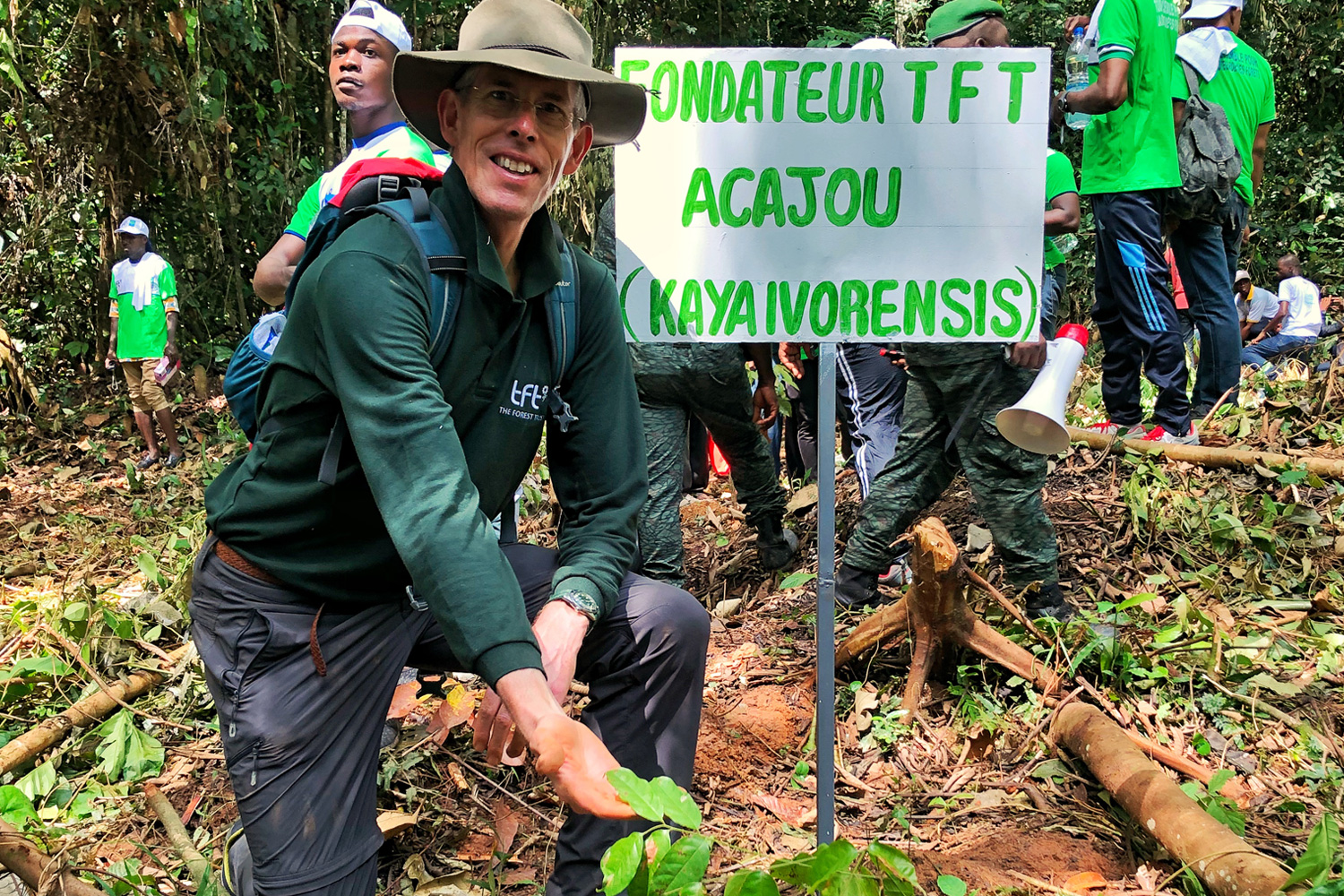
“There’s so many forests just hanging in there around the world,” he says of the latter. “We’re working with Chloris Geospatial, a tech company that’s developed a platform for measuring forest carbon stock, gains, and losses for any landscape, anywhere in the world. It means we can measure how many tons of carbon a forest sequesters or adds to the atmosphere over a given time all the way back to the year 2000. If the forest is a carbon sink we sell the carbon to My Carbon Zero members, with the funds supporting local community development programmes.”
Then there’s Earthtrust which, says Poytnon, “comes from my displeasure and dislike of certification schemes. I believe there’s more that can be done than paying auditors to tell us we’re doing a good job. It has ended being a race to the bottom that’s about cost more than anything else. Earthtrust is about credible and radical transparent verification.
“It’s a digital solution designed to verify company claims and bring unprecedented levels of transparency and verification directly to customers,” he adds. “In essence, it’s a case of getting brands to share the data with us – if they say they’re being regenerative then you should be able to see soil improvements, better livelihoods for farmers, and measurable impact. We take that data and democratise it by hosting it on a website. It’s in the early stages and we’re working with several companies but, understandably, there’s a nervousness about the level of transparency we’re putting out there. I’ve spent my life helping companies on these journeys and it’s tough venturing into the brave new world of no deforestation or human rights protection, but they must do it. And I can tell you, once they cross into that place, they find their businesses flourish, they’re doing better for the world, and people want to engage with them.”
It’s a long time since Poynton chanced upon Baker’s inspirational words on the radio but, you sense, the spirit, ambition, and passion for change remains undimmed. “People tell me I’m doing too much, well hell, there’s a lot of problems affecting things on a huge scale and my attitude is ‘let’s have a go, work with as many people as we can, and try and make a difference’. All of the things we’re working on are linked, they’re not so much pillars as intertwined and interconnected braids that we need to bring everything to, from the intellectual and practical skills through to the emotional, physical, spiritual, and mental ability to take action.
“Humans only change when they’re uncomfortable, so we need to be agents of change that can drive businesses and leaders on these journeys,” he adds. “When people get out of their heads and into their guts and soul, it’s the best journey they’ll ever travel in their life. It’s about finding that balance between the intellectual or practical that makes money, and the emotional and the spiritual that tells them how they’re making money isn’t right and needs to change. If they can get that thing braided together in a way that they live a consistent life with who they are as people, then collectively we can move mountains very quickly. That’s the magic, and I wish it upon every leader in the world.”