

Cleaning the oceans, diversifying conservation, and leaving fast fashion behind: Chris Desai’s journey from Leicester to the Earthshot Prize
“It was a restaurant car park,” recalls Chris Desai. “A family threw their rubbish out of their car next to us and I remember my mum picking up every single piece, knocking on their window, and throwing it back in all over the driver. I was pretty young, but what came next has always stuck with me. She told them ‘take your rubbish home with you, this is our planet, my home, and my children’s home’. It’s pretty powerful seeing someone being an activist like that when you’re a kid. I guess you’d call it positive reinforcement.”
It’s often the smallest actions that define our lives. Desai’s journey is no different, except for the fact you can add several more defining moments like this one to the list. Like experiencing what it meant to be the son of a refugee in 1980s England. Like working in fast fashion only to realise the terrible impact it has on the environment. Like recognising the distinct lack of working class or Black, Asian and minority ethnic (BAME) charity participants when wanting to donate his own company’s money. Or, how a lifelong love of water ended up being the catalyst that spurred him to rid our oceans of plastic. Turns out, it’s a winning combination.
UOCEAN, a grassroots solution for saving the oceans from plastic by 2050, and The Vayyu Foundation are the sum of these influences. The latter was set up by Desai in late 2018 after a decade’s stint as Creative Director at a leading fashion brand – years of travelling for work, meeting suppliers worldwide, and seeing firsthand the impact the industry has on the planet and the millions of marginalised people working to support it, backing Desai into an almost inevitable epiphany. A little over five years later, he heads up two global conservation projects (UEARTH sits alongside UOCEAN), one the UK’s most respected BAME-led charities, promotes and encourages inclusivity in environmental conservation, and runs an organic, sustainable fashion brand.
“I’m a third generation sailor,” says Desai of his enduring love affair with the ocean. “I’ve sailed since I was young and have always been out on the water whenever I could. I feel at home there, it’s a spiritual place and somewhere I always find peace. When fashion and the lifestyle that went with it became too much, it was the obvious way to take some time out; I left the world behind to learn how to sail professionally.”

Transformational journey
Desai spent 10 years in fast fashion, seeing enough to make him want to make meaningful change both personally and for the planet. “I travelled, I’d visit sites around the world and saw things I’ll not forget: rivers dyed different colours from runoff from factories, terrible working conditions, people who were already marginalised or suffering being taken advantage of for cheap labour – just the degradation of our planet. It spurred me on to working with BAME communities, too. I saw how the industry works, how privileged the store groups and buyers are but how disproportionately they affected people of colour around the world. The East creates the products for Western consumers and is basically left with the pollution and fallout from how people are working. I had to get off and get back to who I really was”
Sailing lessons turned into a six-month journey of discovery around the world, where Desai ditched the phone and laptop, instead focusing on authenticity and purpose. “I’d lost who I was,” he reflects. “I’d been working relentlessly and lost sight of the impact I was having – if you love the planet but your job and career don’t align with those inner beliefs, you can’t help feeling a hypocrite and wonder why you’re doing what you’re doing. I distinctly remember a moment that changed me: I was meditating, the sun was shining over the ocean, and I could see dolphins swimming. I just felt deeply connected to the planet and to the water, and a real responsibility to stop what I was doing and take action.”
Initially setting out to change the fashion industry, Desai founded Vayyu, an organic and sustainable luxury fashion brand that offers a viable and impactful alternative to the unsustainable fast fashion model. Vayyu has a transparent supply chain using green and ethical Fair Wear Foundation-accredited factories that ensure responsible labour standards and decently paid employment. Its clothes use sustainable fabrics like organic seaweed, bamboo, linen, and cotton, and pure cashmere and ethical wool, while factories use closed-loop water systems to minimise environmental impact.
Despite the brand’s success, Desai couldn’t settle, feeling he still had more to give. The spark came after recognising a distinct lack of diversity in the charities he was looking to donate to. “I went to six UK charities wanting to give money towards action around clearing oceans or coastlines, and it just struck me,” he explains. “It wasn’t just about race, but social class too – I’m from a working class multicultural family and never really met anyone like me during the conversations I was having. On top of that, I just found it frustrating: when I asked them what action they took, how much plastic they cleaned, or their results the answer always seemed to revolve around ‘doing more research’. If the house is on fire, you don’t stand around analysing how hot it is.”
“I’d lost who I was. If you love the planet but your job and career don’t align with those inner beliefs, you can’t help feeling a hypocrite and wonder why you’re doing what you’re doing”
Diversifying conservation
Desai started his own charity, The Vayyu Foundation, to have a significant environmental impact while promoting and encouraging inclusivity in environmental conservation with ethnic, isolated, and marginalised communities. As the son of an Indian immigrant father who escaped Uganda after being politically ostracised and a Scottish mother with German heritage, it’s a subject close to his heart. “We grew up in Leicester in the UK in the 1980s, and it was a pretty hostile environment at that time with racism and discrimination commonplace,” he remembers. “I’ve experienced it firsthand, as did my parents when they were raising me and my brother. A lot of the time, it was just about survival.
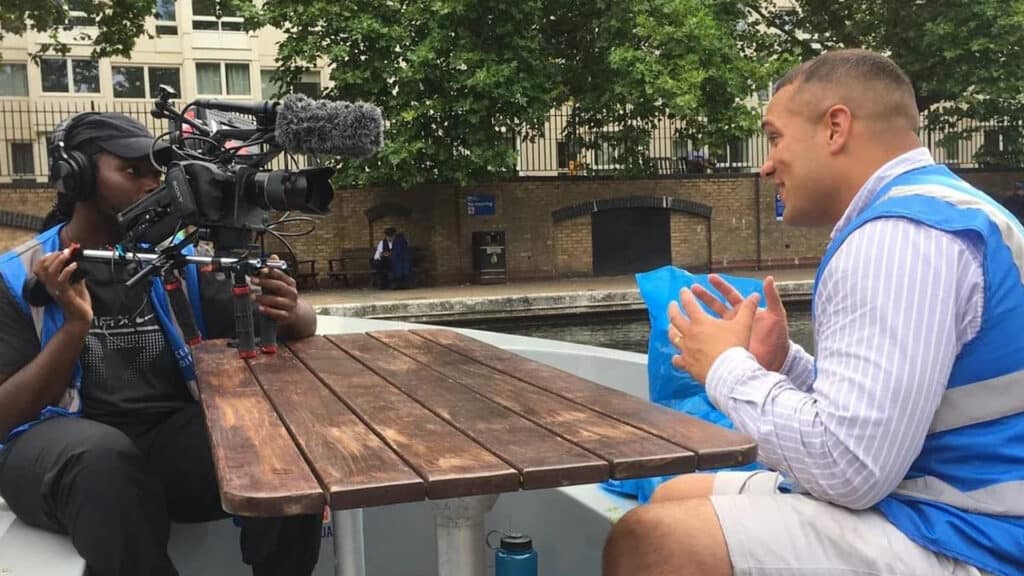
“You recognise how strong many of those communities are, but how constant stigmatisation just removes opportunities and creates a lot of self-imposed barriers,” adds Desai. “We’re trying to break those down with the foundation and open up conversations about the environment and conservation in the communities we work with. The goal really was to make something for everyone regardless of age, colour of your skin, religion, gender, or orientation. It’s about a singular movement united by our shared desire for a healthy planet, conservation has to be something that brings us all together.”
The Vayyu Foundation connects isolated and marginalised communities to raise awareness of conservation, and encourage action on blue and green environmental issues such as river and ocean plastic, coral reefs, marine life, mangroves, tree reforestation, green skills, and food growing. Practical action is mobilised through two global environmental projects: UEARTH 2050 focuses on UK reforestation and community green spaces, while UOCEAN 2050 works with local communities in the UK and internationally to combat canal, river, and ocean plastics and restore marine ecosystems.
Tackling the plastic problem
Desai began UOCEAN in early 2020. The initiative distils his influences and experiences, focusing on community and tackling ocean and river waste, but also breaking down the stigma sometimes attached to things like collecting litter and community action. “It’s funny,” he says, “we have this view of certain jobs or activities like cleaning or waste collection, and look down on the people doing it. I wanted to flip that on its head, make conservation cool or trendy irrespective of who you are and where you’re doing it.”
He set up the first litter pick in early 2020 during the COVID 19 lockdowns in the UK, knowing people would want to get out of the house, meet, or exercise. “I just thought I’d try and give them a better reason,” he says. “I set a challenge on social media: ‘if you want to clean up a local river, canal, or beach then get out there, pick up the plastic, and we’ll rebrand it by giving you litter pickers and blue vests’. It was basically a case of who can collect the most plastic waste towards our overarching goal that still exists of removing one billion kilos – in 2020 that figure represented just 1% of the world’s oceans and river plastics.
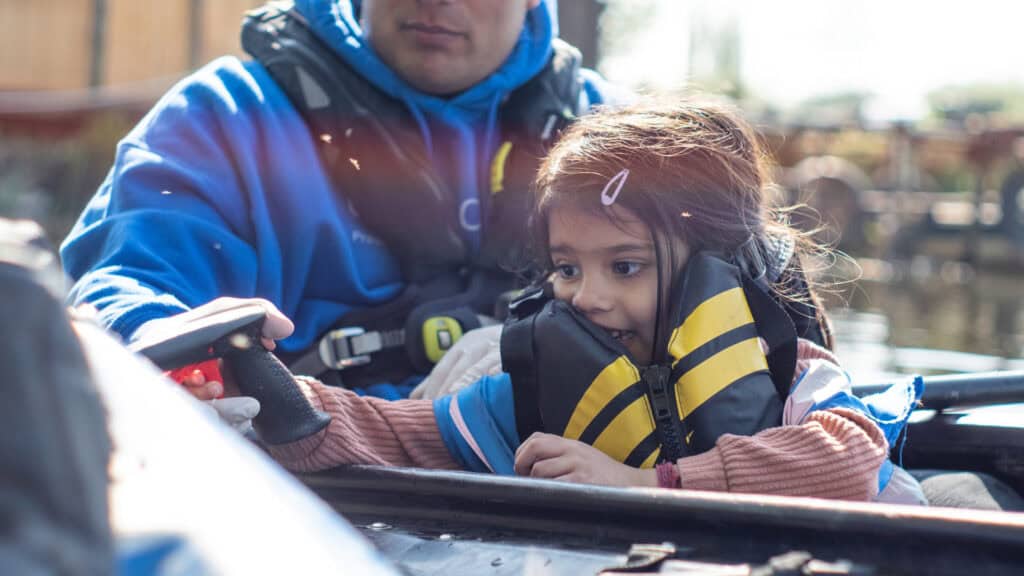
“I’ll tell you a story about breaking down stigma,” he continues. “I went out myself in a case of ‘be the change you seek’, but as soon as I started picking litter I felt embarrassed. I still don’t really know why. It was a feeling that only lasted for a short while but, as I was busy an older lady who I’d noticed watching me approached and said ‘don’t worry, your community service will be over soon, keep going’. It was the biggest blow I’d ever had. On top of feeling a certain way about what I’d been doing, I’d also been judged. After a fair bit of soul searching I realised it was affirming more than anything – removing plastic is something we should all be proud about, not ashamed of, and doing something good for the planet shouldn’t be a punishment.”
Plastic waste makes up 80% of all marine pollution with most of this entering the oceans via rivers and coastlines. There are an estimated 75 to 199 million tons of plastic waste in our oceans, with 33 billion pounds entering the marine environment every year. Almost 1,000 species of marine animals are impacted by ocean pollution and over 500 locations worldwide are recorded as dead zones where marine life cannot exist. Without action it is projected that, by 2050, plastic will likely outweigh all fish in the sea.
“It’s about a singular movement united by our shared desire for a healthy planet, conservation has to be something that brings us all together”
Keep pushing, keep believing
UOCEAN, which has grown to an ecosystem of 33 chapters globally across Europe, the US, India, Africa, and Asia, has several approaches to tackle the problem. Chapter members remove plastic pollution from rivers and waterways by hand, boat, and kayak, and engage in educational projects and collaborations to foster environmental stewardship. “Chapters take ownership of their local water body and all the actions associated with it, whether it’s clearing up plastic, creating media, advocacy, or petitioning the local government,” Desai explains. “We don’t guide what they do. Instead, it has to be authentic and based entirely around the needs of the area and the local communities.
“In Leicester, for example, we have a lot of river plastics but there’s an educational piece to that, too,” he continues. “There is a big Asian community around the river, for which it’s traditional to put the ashes of loved ones into the water when they die. Unfortunately that means a lot of plastic statues and religious items also end up in the river, so we focus on improving understanding of what can and can’t be used. There’s also a lot of plastic from students in the universities, so we often work with those institutions to find ways to educate and prevent the waste from entering the river at all.
Elsewhere in the UK, reports Desai, UOCEAN’s Weymouth chapter is dedicated to removing microplastics from the local waterways, in Kent the team focuses on education and water pollution, and London’s chapter is currently working on upskilling people to be involved – this includes padi or scuba dive courses for underprivileged communities, and training on paddle boarding and boats.

Beyond picking litter by hand UOCEAN embraces new and innovative technologies and solutions in the fight against plastic. This includes autonomous machinery like river robots, deploying river and sea drones to monitor river and ocean health and gather data, and deploying plastic barriers in rivers and entries to the sea. The barriers, which are open source, low cost, and locally made, run across the breadth of a river and reach around 30 cm under the water to allow fish to pass under. Desai is close to launching a river barrier in Leicester, with UOCEAN intending to implement 155 in the UK and more than 1,000 globally.
“It’ll be the first of its kind,” he says of the plastic prevention solution in his hometown. “They’re a more efficient way to collect plastic pollution but symbolically I see them as an imaginary line in the sand, a way for the community to say enough is enough, we’re not sitting by and letting it happen without taking action. It’s so important to do this in cities and with people who, often, never had anything to do with conservation because it was often focused on coastal areas. It’s been shown that 80% of ocean plastics actually come from cities, so if we can stop pollution happening at its source and make sure it never enters the ocean we’re not just protecting the UK, but the whole world.”
Desai and UOCEAN have a long way to go before that goal is met. But, you sense, he wouldn’t want it any other way. With a focus on rolling out more plastic prevention barriers, new workstreams like plastic offsetting projects and replanting mangrove forests, and building more chapters worldwide, that one billion kilos target suddenly doesn’t look out of reach.
“I’m proud of what our volunteers and team leaders have achieved around the world,” Desai reflects. “I’m not necessarily proud of myself, I never want to start thinking like that – it’s a dangerous place and the last thing we need is complacency. I’m a very small part of the UOCEAN web, and the mindset and desire in the organisation is what continues to drive us forwards. But we can’t stop. Until we have seven billion people on this planet taking responsibility for their own footprint and their own pollution, I won’t feel settled. For that we have to keep pushing and keep believing.”