

Tree Aid CEO Tom Skirrow on how thriving trees can transform the lives of communities in Africa’s Sahel region and help reverse the impacts of climate change
The frankincense trees in Ethiopia’s Metema forest, the last green belt before the start of the desert, are a lifeline for members of the local community like 28-year-old mother of two Birtukan Gebeyehu. Yet, like so much of the natural resources and land in the Sahel, a drylands region of Africa where more than 300 million people’s lives are affected by climate change, they’re at risk. Rising temperatures, high rates of tree felling, and unsustainable tapping for frankincense mean that, with no action, the Metema forest could be extinct in just 20 years.
For Birtukan and the communities who rely on the forest for food and money – the trees provide up to 30% of household income for families, who sell their resin to be used as incense and essential oils around the world – this would be devastating. Which is why community-led projects like Tree Aid’s Future Forest initiative, which provides tools and training so the local community can harvest frankincense sustainably and protect the forest for future generations, are so important.
Joining Future Forest in a management and leadership role, Birtukan now leads the forest management project and is the only female executive member. Through her work she has increased her awareness of the climate crisis and conservation of natural resources and, having not had the chance to attend school when she was young, is an advocate for the vital role of education and ensuring her own young children have the opportunities that weren’t available to her. Trees, she says, ‘are the beginning and the end. The whole system exists because there are trees, and if they are destroyed, it would collapse’.
“In an environment where people already face poverty and food insecurity, every time more land is degraded the strain on life increases”
The challenges in the Sahel
The work in the Metema forest is just one example of many that demonstrate the potential of a thriving ecosystem of trees. Tree Aid recognises this, working with local people in Burkina Faso, Ghana, Mali, Niger, Ethiopia, and Senegal to tackle poverty and the effects of the climate crisis by growing trees, improving livelihoods, and restoring land. Its projects, says CEO Tom Skirrow, help to provide food and income to those who most need it today, and protect the environment for tomorrow.
“When we were founded in 1987 famine was rife across the drylands of Africa,” he says. “The aid effort at the time providing food, clothing, and water was absolutely a necessary approach, but it was also short-termist. Our premise was that there must be something more sustainable that could also empower local communities and help tackle many of the problems they faced. It was quite forward-thinking at that point to say that if trees and landscape management could be brought to these areas and they were restored to what they once were, then it should and will reduce desertification, which in turn will lower the likelihood of drought and famine.”
The people of the Sahel face some of the most challenging living conditions imaginable as the result of climate change. Daily lives across the region are devastated by a drastic and ongoing reduction in fertile land, food is difficult to grow, poverty is increasing, and millions are forced to go hungry or flee their homes in search of work.
“This is a part of the world most affected by the climate crisis and land degradation,” Skirrow explains. “As an example, there’s roughly nine million hectares in Burkina Faso alone that was once viable as arable land, but no longer is. In an environment where people already face poverty and food insecurity, every time more land is degraded the strain on life increases. The challenges of climate change become exponential. Temperatures in the Sahel have increased by around 1% since the 1970s and are projected to increase by a further 3% to 4% by the end of this century – potentially double the global forecasted rise – so you have this huge impact of the changes that are happening in a place that’s already one of the most vulnerable.”
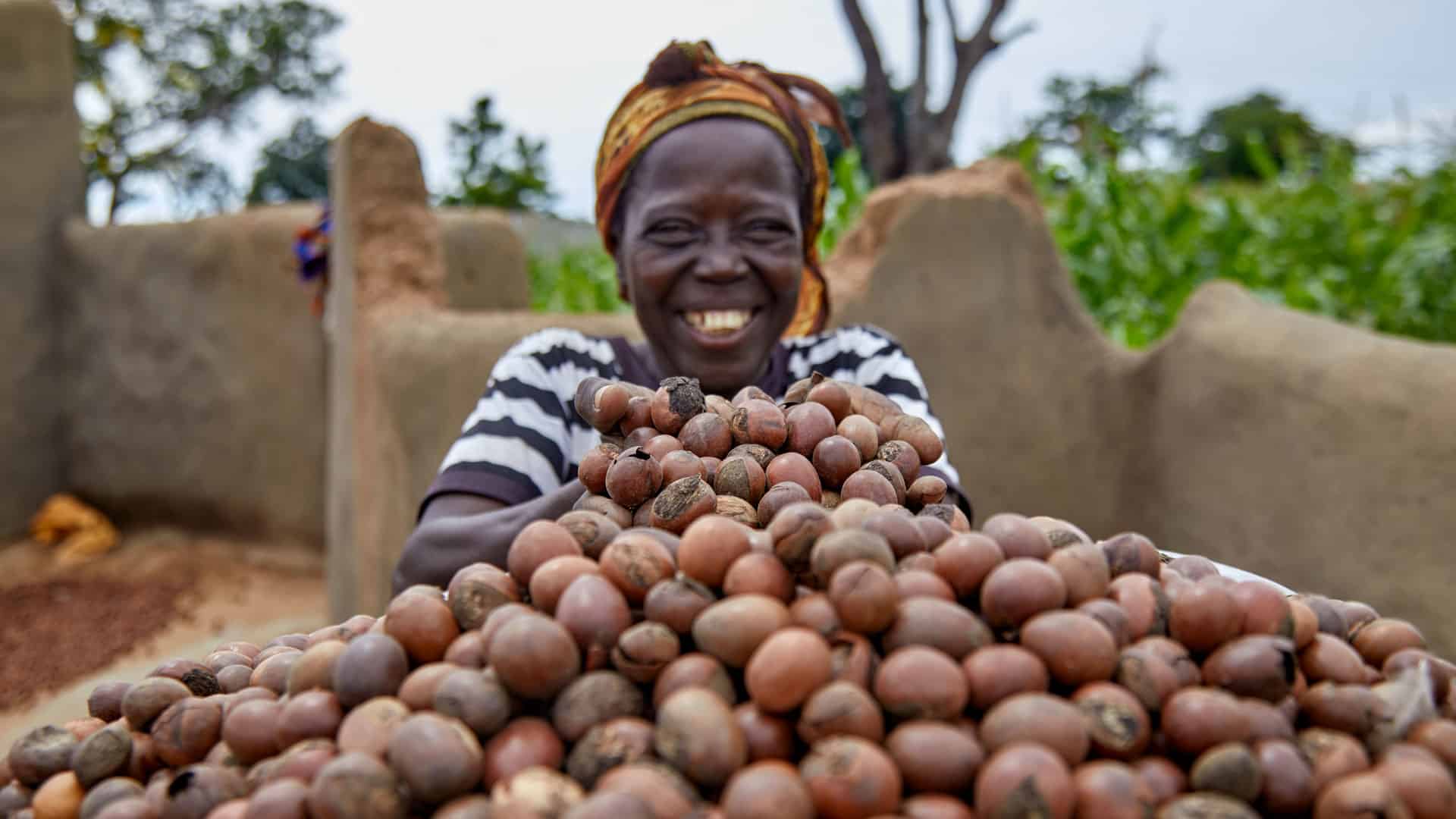
Communities in the region rely on farmland for food and income, yet land degradation from human-related and natural factors like overfarming, overgrazing, deforestation, and extreme weather are turning fertile land to desert. Without trees to stabilise the soil, store water, and protect the land, droughts and floods are more frequent and severe, and soil that was once rich in nutrients can no longer support life. Globally, 12 million hectares of land are lost to desertification each year while, across Africa, 700 million hectares of forest landscapes are already degraded; in the continent’s drylands 300 million people are vulnerable to desertification.
Tree Aid takes a holistic and community-led approach to reversing the impact of some of these challenges across four key areas: forest governance, natural resource management, enterprise development, and food security and nutrition. The first, says Skirrow, provides the foundation upon which to make lasting change: “It’s about saying ‘what in this landscape do people have the responsibilities and rights to manage and care for?’,” he states. “If that care isn’t there the landscape degrades, so our forest governance model focuses on working with the local community to understand how each member can play a part and have a right and responsibility within the landscape that surrounds their community. If you don’t have those systems, rules, expectations, and responsibilities and all the other work we go on to do will likely fail.
“Our approach to natural resource management is about understanding the incentives to restoration,” he continues. “There’s a negative cycle at the moment of needing more viable land to farm for income, clearing existing forestry because of that, and using trees for fuel. To make restoration a viable option for people on the frontline of the climate crisis we work with communities to demonstrate the short- and long-term incentives for planting trees. In the long term it’s better for agroforestry, crop yields and water retention, preventing erosion, making soil more fertile, providing shade from the sun, and food.”
Birtukan Gebeyehu
Birtukan leads Tree Aid’s Future Forest forest management project in Ethiopa’s Metema forest, one of the largest green belts before the start of the desert. The forest’s frankincense trees provide up to 30% of household income for families in the local community yet, without action, they could be extinct in 20 years due to the impacts of deforestation and the climate crisis.
By participating in the project, Birtukan has received training on ways to protect the forest for future generations, and increased her awareness of the climate crisis and the conservation of natural resources. Today she champions the forest’s trees in her community, saying ‘they are the beginning and the end. The whole system exists because there are trees, and if they are destroyed it would collapse’.
For Birtukan, like so many women involved in Tree Aid’s projects, the impact of participating in work to tackle community climate challenges reaches far beyond trees. Difficult personal experiences when young meant she was unable to attend school leaving her passionate about education and her children having opportunities she didn’t. Her work with Tree Aid and role as a leader has improved her self-esteem and encouraged her to support local initiatives transforming the lives of women and girls in the community.

Building sustainable enterprise
In the short term trees provide the opportunity to diversify income, build sustainable livelihood opportunities, and enterprise development. Across Africa 66% of the population are in ‘vulnerable’ employment; in the sub-Saharan region 413 million people live in extreme poverty. In this context, ongoing reduction of fertile land and the climate crisis make it increasingly hard for people to grow crops to eat and sell and, with no stable source of income, basic essentials like healthcare and education are out of reach.
Tree Aid supports people to establish and develop businesses using ‘non-timber’ forest products such as fruits, nuts, leaves, and oils to create viable enterprises capable of supplementing farm income. Women are especially vulnerable to the impact of the climate crisis in the Sahel, where the threat to rural livelihoods sees many adult men leave their communities to find work in urban areas. Because of this, the responsibility to maintain natural resources, provide food, fuel, shelter, and income rests with women who, in countries like Burkina Faso, face challenges such as insecure rights, high levels of unpaid work, and unequal access to land, health, and education.
Since 2017, Tree Aid has supported women and children in Burkina Faso through the creation of nutrition gardens. These small communal village plots are dedicated to cultivating fast-growing trees like moringa and baobab that produce leaves in as little as three months, are highly nutritious, and can be used fresh or dry for consumption and sale. The moringa tree in particular brings a host of benefits. Known as the ‘drought warrior’, it’s almost entirely edible from leaves to roots, packed with essential nutrients – just 100g of leaves contain as much protein as an egg, calcium as a glass of milk, and vitamin C as an orange – and is highly resistant to drought. Local people can use the trees’ products to set up enterprises, with several groups having already developed business plans and selling in shops and kiosks.

“We ensure people learn the right skills and capabilities to restore and protect their land for future generations,” adds Skirrow. “That covers everything from how to plant and grow a tree, understanding how to manage forest fires or nurturing a tree that is sick, through to managing the soil and water around the tree so that when the rains come it can be slowed or retained for the purpose of growing the trees. And, in terms of how we work, all of these natural resource management skills actually come further down the line that you’d imagine; you set the right governance and understanding of roles and responsibilities, clearly map out the incentives and opportunities, embed the skills, and only then do you plant the tree.”
Relying on farmland for food and income makes life unpredictable. Too much or too little rain, rising temperatures and poor-quality soil means that communities often struggle to grow enough food. As a result, malnutrition and vitamin deficiencies are common in the areas in which Tree Aid works – in sub-Saharan Africa 239 million people are undernourished, while nearly four million children experience severe wasting. In this environment, trees like baobab or moringa are a crucial resource of fruit, nuts, and leaves, providing a stable and reliable alternative to crops that may fail.
“There are millions of people out there that deserve better lives”
The power of community
Skirrow points out that across Tree Aid’s holistic approach, community empowerment and working in partnership with people in the Sahel is fundamental. This ethos underpins the Great Green Wall, an international effort that’s community-focused and African-led to grow a vast belt of trees, vegetation, and fertile land across the drylands of the Sahel to increase biodiversity, restore and protect land, grow food, and create green jobs. By 2030, the Great Green Wall aims to restore 100 million hectares of land, sequester 250 million tons of carbon, and create 10 million green jobs. As part of the movement, Tree Aid works together with the African Union and the UN Convention to Combat Desertification to make lasting change.
“The only way to achieve lasting change – and change that’s desperately needed in this environment – is to work together, support the community to be empowered, and to have everyone pulling in the same direction,” says Skirrow. “When we work with a community it’s about them becoming the change agents. They can’t be the change agents without agency, and they can’t have that agency without empowerment. On a practical level that involves looking at the skills that are lacking, how we can shape them together, how we can help them understand the rights and responsibilities they have to the space, and perhaps build a fairer system for managing it. If everyone contributes to that system together, they have the ability to make collective positive choices to create better outcomes.”
The benefits trees provide to regions like the Sahel and its people are vast. Aside from incentives for income and the provision of nutritious sources of food, reforestation work like that which Tree Aid carries out improves biodiversity, helps prevent soil erosion, improves water retention and prevents flooding, improves soil fertility and thus crop yield, and provides shade for people and animals in increasingly high temperatures. And yet, the work isn’t simple.
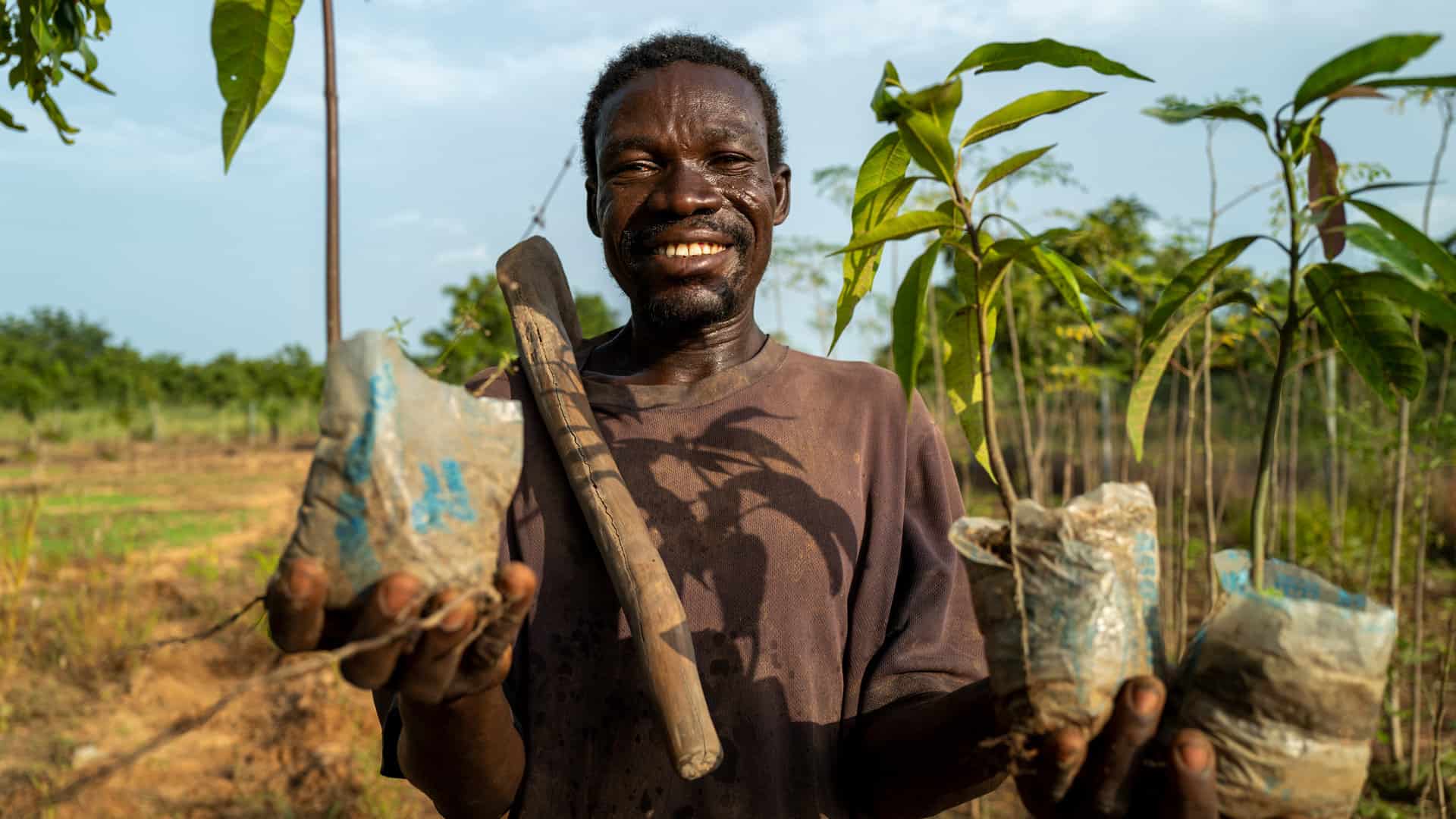
“The best time to plant a tree was 20 years ago, the second best time is now, and that’s acceptable for us because we’re in this for the long game,” says Skirrow. “Of course, you could fly a drone over the area and drop seeds or seedlings and hope it works, but the reality is it doesn’t. You make this work by working with the communities and building something they want to happen. If we don’t start taking action now, then we’re in serious trouble. I’d challenge anyone to say the Sahel is too hard to restore. It’s a biodiverse and interesting environment. Yes, it’s tough terrain but if you plan well and choose the right trees for the conditions you can move at scale with the community.
“There is clearly a link between global deforestation and land degradation and global heating and the climate crisis,” he adds. “That means there’s a clear incentive for a world that’s trying to solve this problem to look to a place that is not only most affected by climate change, but also has land ready to be restored and a community ready to put work into that space. If this is genuinely something we see as a global solution to a global problem, then we should be looking at places like the Sahel, where the benefits are myriad, and considering how to support the restoration effort more effectively.”
“We ensure people learn the right skillsand capabilities to restore and protect their land for future generations”
Asking challenging questions
In 2022 Tree Aid launched a new five-year strategy. It recognises both the ‘profound and urgent’ need for transformation and the opportunity to make significant and lasting change across the drylands of Africa. It also recognises that the scale of work required is beyond that which Tree Aid can do alone. This, says Skirrow, means focusing on engaging with other organisations and governments to instigate broader and systemic change.
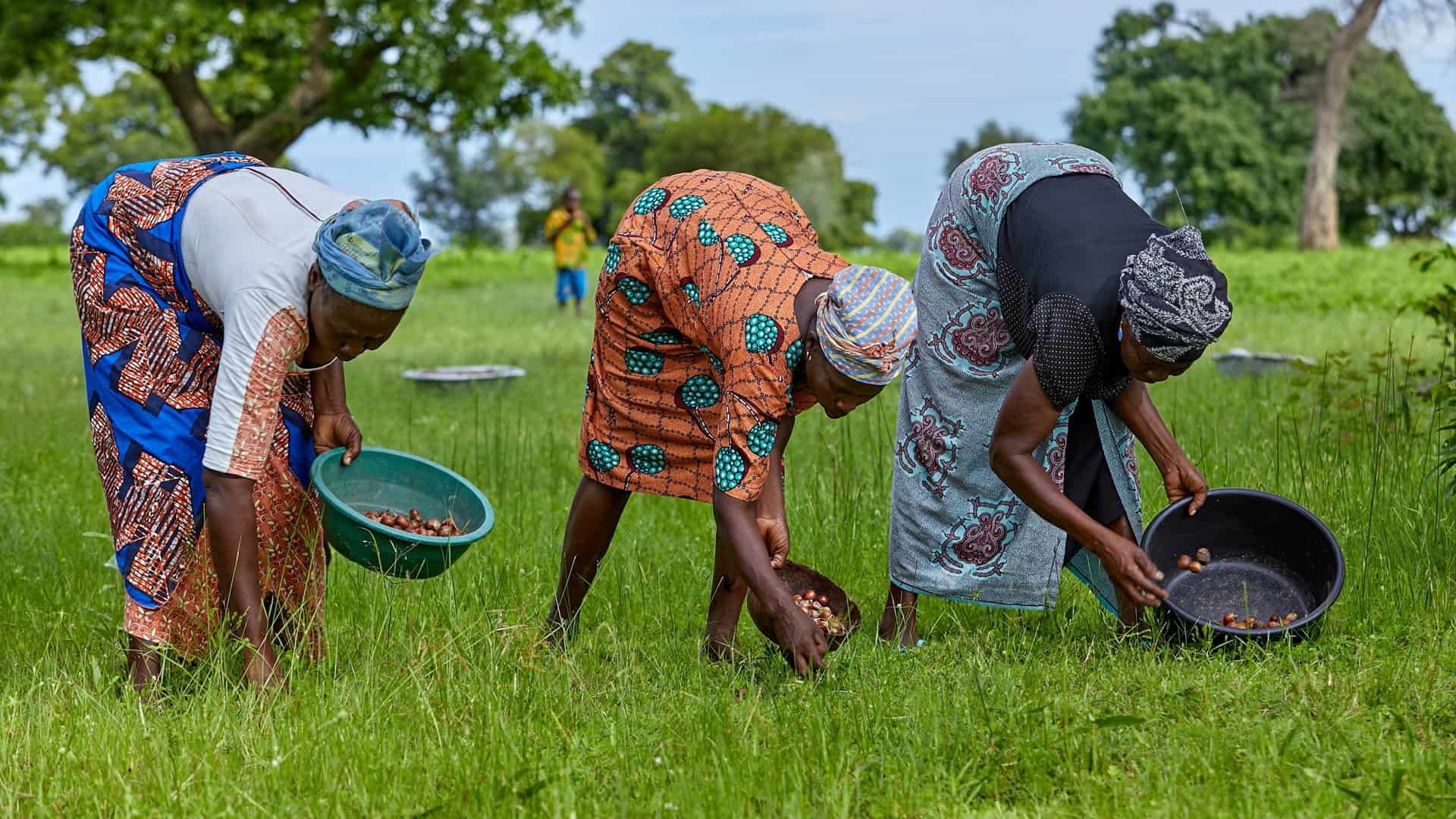
“It’s about thinking more deeply about what the systems are that are stopping this happening across the board,” he says. “That involves challenging questions for all of us: why is the Sahel only ever mentioned when we’re talking about a coup? Why do regions and countries that don’t provide major exports or ties to trade links, or are not a part of the geopolitical sphere get forgotten? Or why aren’t we talking about the need to put funding into the region from international governments?
“There needs to be a ripple effect from the work we’re doing and the work of the Great Green Wall. It’s about systems change – influencing local governments to create policies for incentives, trade, and sustainable environmental management, but also securing the investment needed to drive these changes. We have to bring the Sahel to people’s attention so they recognise it’s the centre of the climate and poverty crises, and that there are millions of people out there who deserve better lives.”